Fly season is the part of horse ownership nobody talks about romantically. Flies bite, lay eggs in eyes, swarm sweat-soaked coats, and turn quiet horses into stomping, head-shaking, miserable animals. The good news: a layered fly-control plan keeps most flies under control with minimal stress.
This guide walks you through masks, sheets, sprays, stable management, and feed-through options — and which combinations actually work.
Why fly control matters
Flies are not just annoying. They cause real problems:
- Eye irritation and infection (especially summer sores)
- Skin reactions and welts from biting flies
- Restlessness, head-shaking, stomping, weight loss in heavy infestations
- Disease transmission in some areas
A horse covered in flies is not a happy horse. Effective fly control is part of basic summer welfare.
Fly masks
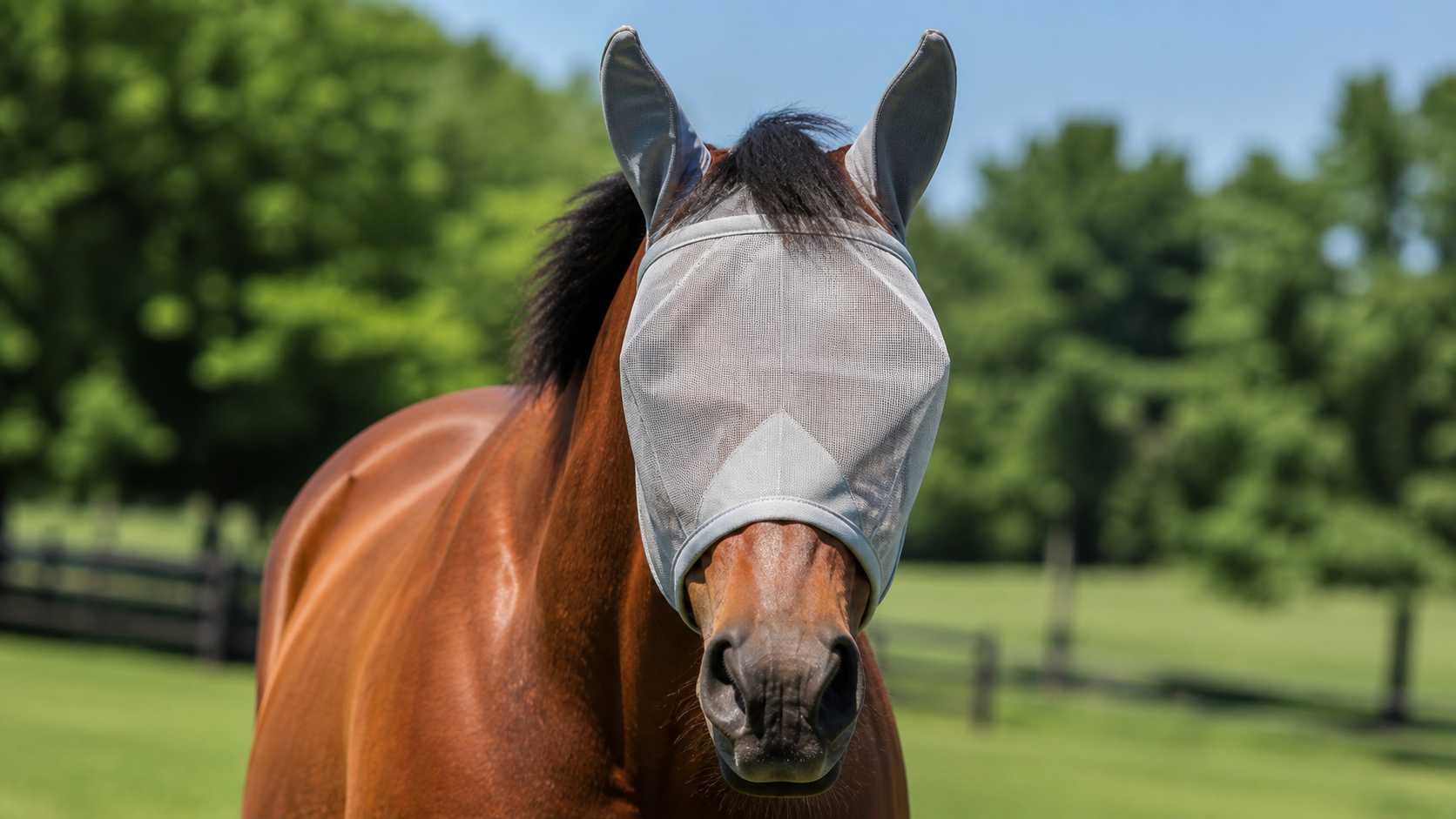
A fly mask is the single most useful piece of fly gear for most horses. It covers the eyes and ears (depending on style), keeping flies out of the most sensitive areas.
What to look for:
- Soft mesh fabric that allows full vision
- Snug fit without contact between mesh and eye
- Fleece trim around openings to prevent rubs
- Optional ear coverage for sensitive horses
- Velcro or buckle closures that hold but release if needed
Modern fly masks are designed for 24/7 wear, but always check fit twice daily — for rubs, dirt buildup, or shifted fit. Remove and clean regularly.
Fly sheets
A fly sheet is a lightweight mesh body cover that protects the horse from biting flies, midges, and gnats. Useful for:
- Horses bothered by midges (no-see-ums) or biting flies
- Sensitive-skinned horses
- Horses turned out long hours during peak fly season
Fit matters — a poorly fitted fly sheet rubs and traps heat. Choose breathable mesh, look for shoulder gussets that move with the horse, and remove daily for grooming and skin checks.
Fly sprays
Fly sprays repel and/or kill insects on contact. They come in two main types:
- Synthetic pyrethrin-based: stronger and longer-lasting; for working horses or heavy fly pressure
- Natural / botanical: gentler, shorter duration; good for daily use on sensitive horses
How to use safely:
- Read the label for application frequency and species safety
- Patch test on a small skin area before full application
- Avoid eyes, mouth, and any open wounds
- Apply lightly — soaking does not improve effect
- Reapply after sweating or rinsing
For skin reactions, raw spots, welts, or persistent irritation, contact your veterinarian.
Stable management — the most overlooked layer
Sprays and masks help, but the most powerful fly control is reducing where flies breed.
- Manure management: remove and compost or dispose daily — flies breed in manure
- Wet bedding: remove and replace promptly
- Standing water: empty buckets, clean troughs weekly
- Garbage and feed waste: sealed containers
- Fans: properly mounted, equine-safe — flies dislike moving air
- Fly traps: hung outside the barn, not inside (they attract flies)
- Sticky strips: in shaded areas of the barn for adult flies
Good barn hygiene reduces fly populations more than any spray.
Feed-through fly control
Feed-through fly control products contain larvicides that pass through the horse’s manure and prevent fly larvae from developing. They work best when:
- Started early in the season (before fly populations explode)
- Used by all horses on the property (not just one)
- Combined with manure management
Feed-through products are a long-term layer, not an instant fix. Discuss with your veterinarian, especially if you have other animals on the property.
Patch testing for skin reactions
Before using a new spray, balm, or wipe, patch test:
- Apply a small amount to one spot (inside the front leg works well)
- Wait 24 hours
- Check for redness, welts, or hair loss
If your horse develops welts, hives, or persistent irritation, stop the product and contact your veterinarian.
A layered plan that works
The best fly control combines several layers:
- Manure removed daily
- Fly mask during turnout
- Fly sheet for sensitive horses
- Fly spray before riding or peak times
- Fans + traps in the barn
- Feed-through (when appropriate)
One layer alone rarely controls flies. Together, they make a real difference.
When to call the vet
Contact your veterinarian for:
- Welts, hives, or rapidly developing skin reactions
- Persistent eye discharge or eye injuries
- Open sores from fly bites that do not heal
- Severe head-shaking or behaviour changes
- Any sign of infection
A simple summer fly-control checklist
- ✅ Manure removed daily
- ✅ Water buckets and troughs clean
- ✅ Fly mask checked twice daily
- ✅ Fly sheet for turnout (sensitive horses)
- ✅ Fly spray applied before riding / peak hours
- ✅ Fans running in the barn
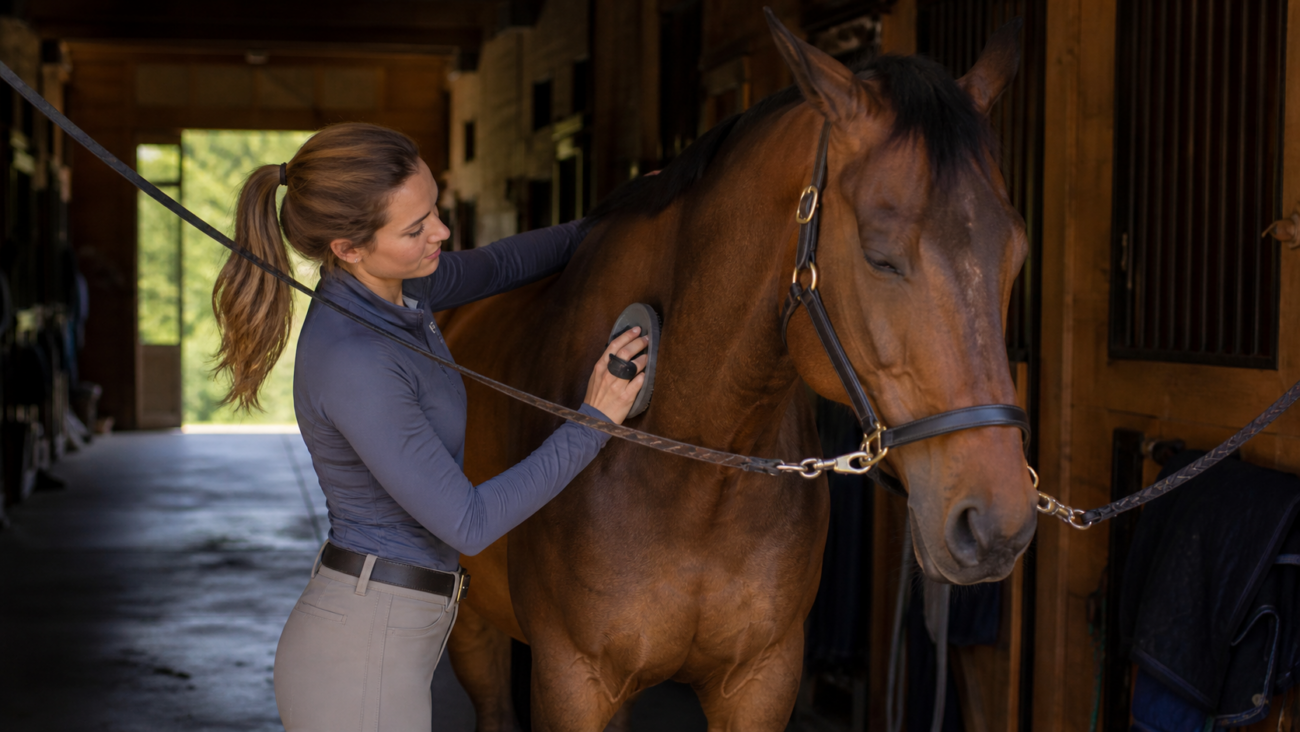
- ✅ Skin checked daily during grooming
FAQ
Can my horse wear a fly mask 24/7?
Most modern masks are designed for continuous wear, but check fit twice daily, remove and clean every few days, and watch for rubs. Eyes should never touch the mask material.
Are natural fly sprays effective?
For mild fly pressure on sensitive horses, yes. For heavy infestations or hard-working horses, synthetic pyrethrin-based sprays typically last longer. Many owners use both — natural for daily, stronger for special situations.
Should I use a fly sheet during the day or only at night?
Most fly sheets are designed for daytime turnout, when flies are most active. Remove at night and during storms. Always check skin under the sheet for rubs and heat.
Are sticky fly traps safe near horses?
Hang them where horses cannot reach — feathers and tail hair stick to the strips. Hang outside or in unused barn areas, not above stalls or feed.
Can I use fly spray on a horse with cuts or scratches?
Avoid sprays on open skin. They can sting and delay healing. Spot-clean wounds, treat with vet-approved wound care, and apply spray around (not on) the area.
The takeaway
Fly control is a season-long routine, not a one-product fix. Combine masks, sheets, sprays, stable management, and (when appropriate) feed-through products for a horse that stays comfortable through the bug-heavy months. Browse our Equestrian & Ranch shop for fly gear, or explore more horse guides on the Petrending blog.






 Food & Nutrition
 Treats & Chews
 Toys
 Beds & Furniture
 Bowls, Feeders & Hydration
 Collars, Leashes & Harnesses
 Crates, Carriers & Travel
 Apparel & Accessories
 Grooming
 Health & Wellness
 Training & Behavior

 Food & Treats
 Litter & Cleanup
 Toys
 Trees & Scratchers
 Beds & Furniture
 Bowls & Feeders
 Health & Wellness
 Collars, Harnesses & Apparel
 Carriers & Travel