Daily grooming is one of the most underrated parts of horse ownership. It is bonding time, a moving health check, and the simplest way to keep your horse comfortable and clean. The good news: a real, useful grooming session takes only 10 minutes a day.
This guide walks you through the brush kit, the order to use them, hoof care, mane and tail basics, and how to spot problems early. Build the routine slowly — your horse will tell you what they like.
Why daily grooming matters
Daily grooming distributes natural skin oils, lifts dust and dander, prevents matting in mane and tail, and gives you a chance to check every inch of your horse. It also builds trust. The horse who is brushed calmly every day is the horse who stands still for the vet, the farrier, and the trailer.
The brush kit you actually need
You can spend hundreds on grooming products, but the basics cover almost every horse:
- Curry comb (rubber or jelly) — the workhorse, lifts dirt
- Hard brush (dandy brush) — flicks loosened debris off coat
- Soft brush (body brush) — finishes coat, used on face
- Hoof pick with brush — daily must-have
- Mane and tail comb or wide-tooth brush
- Sweat scraper for after baths or hard rides
- A few soft cloths for face, eyes, dock area
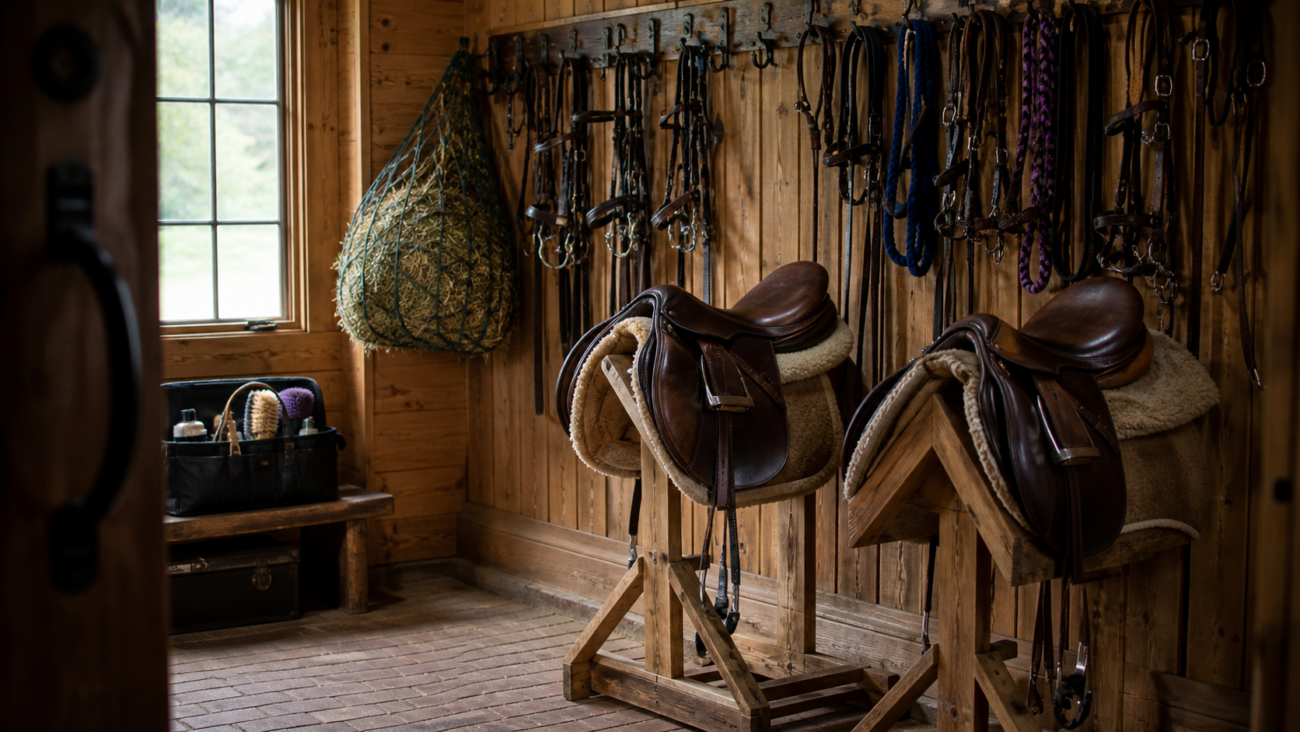
Keep them in a clean caddy by your grooming spot.
Currying first
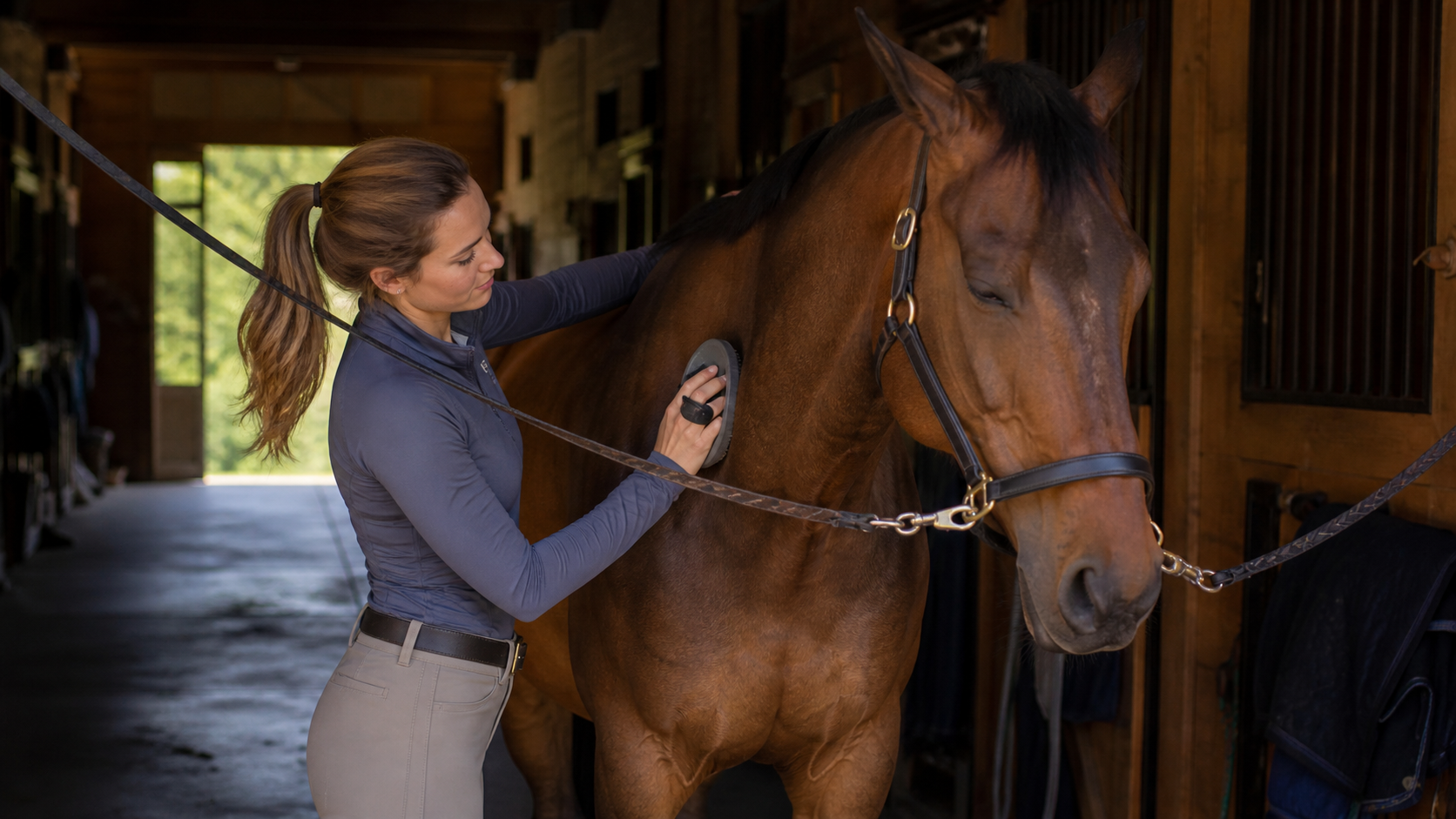
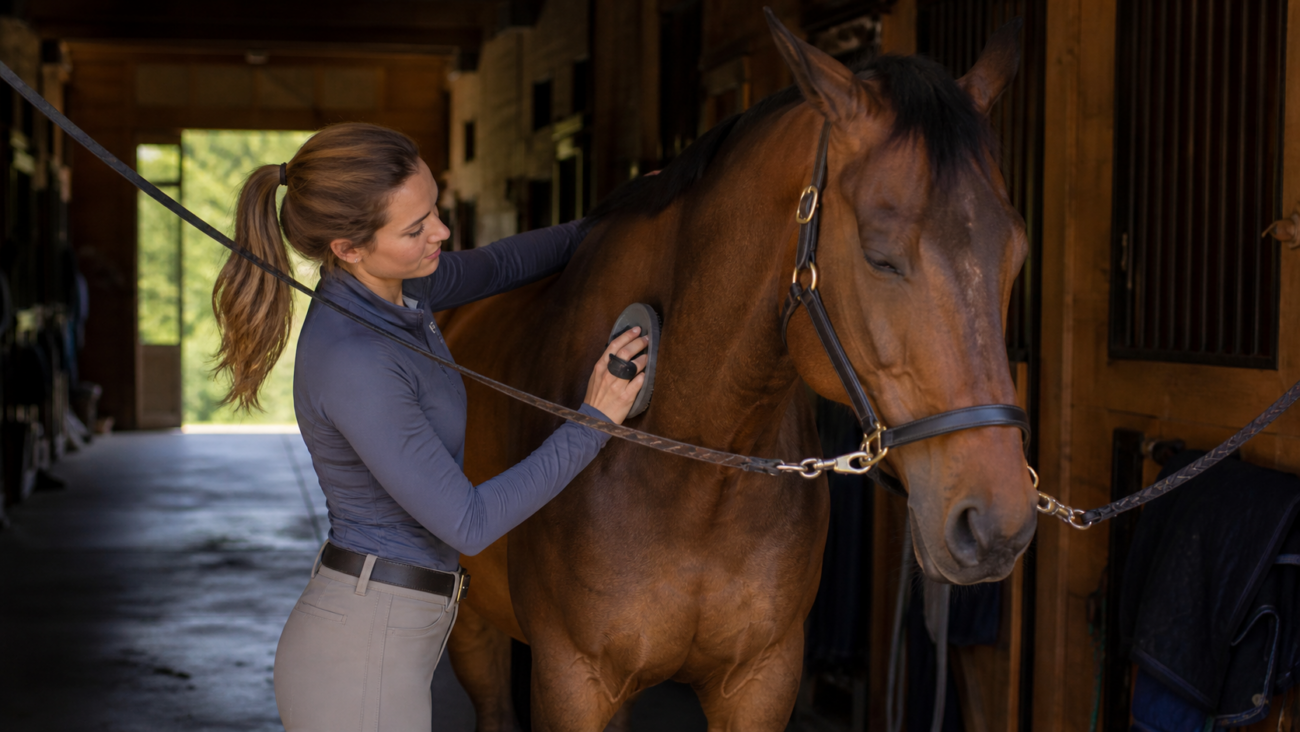
Curry combs are the foundation of grooming. Use small circular motions in the direction of the hair, with moderate pressure. Skip bony areas (spine, hips, lower legs) and use gentler pressure on the belly. Most horses love a thorough curry — watch for the tell-tale relaxed lower lip.
Brushing the body
After currying, use a hard brush in short, flicking strokes to remove the loosened dirt and hair the curry has lifted. Work from front to back, top to bottom. Switch to a soft brush for finishing and for sensitive areas like the face — many horses prefer face cleaning with a damp cloth instead of a brush.
Mane and tail care
Mane and tail care should be gentle. Hair grows back slowly, so do not rip through tangles.
- Work bottom-up, holding the tail above the tangle to prevent pulling
- Use detangler spray for stubborn knots
- For mane, separate strands with fingers first, then comb
- Wash mane and tail every few weeks, more in summer
Hoof picking — the daily must-do
The single most important grooming habit is daily hoof picking. Stones, packed mud, debris, and signs of thrush hide here.
- Pick toward the toe (away from yourself)
- Clean the frog area gently
- Check for any heat, smell, or unusual sensitivity
- Note hoof condition between farrier visits
For any new lameness, hoof crack, or unusual sensitivity, contact your farrier and your veterinarian.
How often to bathe
For most horses, full baths every 2–4 weeks in warm weather are plenty. Daily rinses with clean water are fine after sweaty rides. Avoid heavy detergent shampoos every day — they strip natural oils and dry the coat.
In cool weather, skip cold-water baths altogether. Spot-clean with a damp cloth and dry shampoo if needed.
Spotting issues early during grooming
While grooming, run your hands along your horse’s body. You are checking for:
- Lumps, bumps, or new heat
- Cuts, scratches, or fresh swelling
- Bites or insect welts
- Coat changes (dull, dry, dandruff)
- Unusual sensitivity (flinching, ear-pinning)
Anything new — call your veterinarian. Catching problems early is one of the best parts of daily grooming.
A 10-minute daily routine
- Pick out hooves (2 min)
- Curry the body in circles (3 min)
- Hard brush, then soft brush (3 min)
- Comb mane and tail gently (1 min)
- Wipe face and eyes with damp cloth, check eyes/nostrils (1 min)
Beginner mistakes to avoid
- Brushing too hard on bony areas
- Skipping hoof picking on rest days
- Yanking through tangles
- Sharing brushes between horses (skin issues spread)
- Not cleaning the brushes themselves (rinse curry combs weekly)
Seasonal grooming differences
Grooming routines shift with the seasons:
- Spring: heavy shedding — use a shedding blade or rubber curry to lift the loose winter coat. Ten minutes with a curry comb saves hours of cleanup later.
- Summer: sweat and dust build up — daily rinses with cool water, sweat scraping after rides, and more frequent fly spray
- Fall: keep the coat clean as the winter coat grows in; a body brush distributes new oils
- Winter: less bathing (cold water + cold weather is risky), more spot-cleaning, and check skin under blankets
Adjust how often you brush, rinse, and bathe to match the season.
Grooming helps you notice small changes early
The hands-on time of grooming is your best chance to catch problems before they become serious:
- A new lump or warm spot
- A small cut, bite, or sore
- Heat in a leg or hoof
- A subtle change in muscle tone
- Sensitivity that was not there yesterday
Most owners find issues during grooming rather than during a vet visit. If anything feels different, contact your veterinarian — early action is always easier than late.
Cleaning your brushes and grooming tools
Dirty brushes spread skin issues and stop working well:
- Rinse curry combs and brushes weekly with mild soap and warm water
- Air dry fully before reusing
- Replace brushes when bristles flatten or harden
- Wash mane and tail combs separately to keep them clear of fine debris
- Never share brushes between horses to prevent spreading skin conditions
Clean tools are part of clean grooming.
FAQ
How long should daily grooming take?
10 minutes for a quick maintenance session, 15–20 minutes before a ride, and 30+ minutes for a full bath day. Daily hoof picking is non-negotiable — never skip it.
Can I groom every day, even on rest days?
Yes. Daily grooming is good for the coat, the bond, and your daily health check. On true rest days, a quick 5-minute session is enough.
How often should I wash my horse’s brushes?
Rinse curry combs and brushes weekly with mild soap and water; let dry completely before reusing. Do not share brushes between horses to prevent spreading skin conditions.
What if my horse hates being groomed in one spot?
That is information, not bad behaviour. Common causes include sore back, ulcers, ill-fitting tack, or a sensitive area from old injury. Adjust pressure and consult your veterinarian if it persists.
Can I use human shampoo on a horse?
No. Use products formulated for horses. Equine pH and skin sensitivity are different from human skin, and the wrong product can cause irritation or dryness.
The takeaway
Daily grooming is the foundation of good horsemanship. Ten minutes a day keeps your horse comfortable, your bond strong, and your eye sharp for early problems. Browse our Equestrian & Ranch shop for grooming kits and supplies, or explore more horse guides on the Petrending blog.





 Food & Nutrition
 Treats & Chews
 Toys
 Beds & Furniture
 Bowls, Feeders & Hydration
 Collars, Leashes & Harnesses
 Crates, Carriers & Travel
 Apparel & Accessories
 Grooming
 Health & Wellness
 Training & Behavior

 Food & Treats
 Litter & Cleanup
 Toys
 Trees & Scratchers
 Beds & Furniture
 Bowls & Feeders
 Health & Wellness
 Collars, Harnesses & Apparel
 Carriers & Travel