Saltwater aquariums are easier to start than ever — but the difference between a thriving reef tank and an expensive disappointment usually comes down to which fish you pick first. The good news: there are dozens of beginner-friendly saltwater fish that are colorful, hardy, and well-suited to home tanks. This guide walks you through 30 of the best, grouped by family, with notes on tank size, compatibility, and the mistakes most new aquarists make.
Before you start picking favorites, two rules to remember: plan around your smallest tank dimension (not just gallons), and buy captive-bred whenever possible. Both choices reduce stress on the fish and dramatically increase your chances of keeping them long-term.
Start with compatibility, not color
The most common rookie move is picking fish on looks alone. Saltwater fish vary wildly in temperament — some are peaceful community fish, others are highly territorial, and a few will simply eat smaller tankmates. Before you buy anything, plan your stocking list as a whole: peaceful fish first, semi-aggressive species later, and known troublemakers (large angelfish, triggerfish, lionfish) only if you are committing to a species-only or aggressive setup.
Tank size: the rule that saves the most fish
Tank size is non-negotiable for many marine species. A 20-gallon nano can comfortably house clownfish, gobies, blennies, and small cardinalfish. A 40-gallon breeder opens up chromis schools, dwarf angelfish, and small wrasses. Tangs and surgeonfish need 75-gallon tanks at the absolute minimum, and most need 125+ gallons of swimming length to stay healthy long-term. If you cannot provide that space, skip them for now — there are dozens of stunning fish that will thrive in a smaller tank.
Clownfish — the perfect first fish
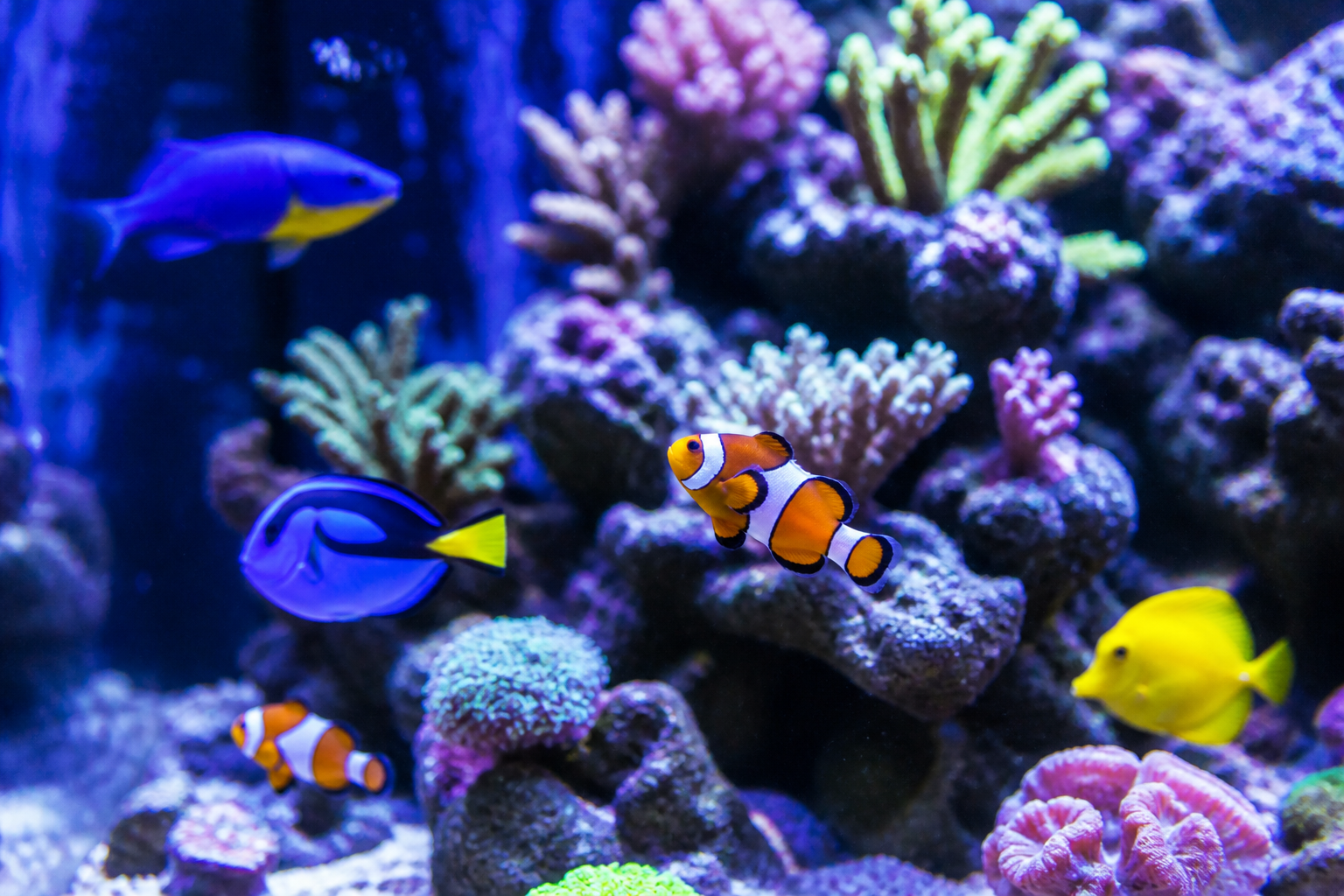
Ocellaris and percula clownfish are by far the most beginner-friendly saltwater fish in the hobby. They are hardy, eat almost any prepared food, tolerate a wide range of water parameters, and tend to bond as pairs. Captive-bred clownfish are widely available and are dramatically more peaceful and disease-resistant than wild-caught.
Other excellent picks: the slightly larger maroon clownfish (one per tank), and the patterned “snowflake” or “picasso” clownfish variants — same easy-going species, different markings.
Gobies — quirky personalities for nano tanks
Gobies are some of the most charming small saltwater fish you can keep. Yasha gobies, yellow watchman gobies, and tiger watchman gobies pair naturally with pistol shrimp in a famous symbiosis. Neon and clown gobies stay tiny and add color without aggression. Most gobies are reef-safe, eat small frozen and pellet foods, and rarely outgrow a 20–30 gallon tank.
Blennies — bottom-dwelling characters
Lawnmower blennies and tail-spot blennies are popular for their personalities and their habit of grazing nuisance algae. Bicolor blennies and midas blennies are also gorgeous and beginner-friendly, though midas blennies do best with plenty of swimming room. Most blennies are peaceful with non-blenny tankmates but can squabble with their own kind in smaller tanks.
Cardinalfish — peaceful schoolers
Banggai cardinalfish are an absolute classic — graceful, distinctive, and one of the few saltwater fish that breed reliably in home tanks. Pajama cardinalfish school nicely in groups of five or more and bring movement to the middle of the tank. Both species are slow eaters, so be patient at feeding time and keep them with non-aggressive tankmates.
Chromis — easy schools, with one warning
Blue-green chromis are the cheapest, easiest schooling marine fish you can buy. They are hardy, peaceful with most tankmates, and bring a real reef feel to a tank. The catch: they often hassle each other in small groups. If you keep chromis, start with a school of six or more in at least 40 gallons, and accept that the dynamic can shift over time.
Wrasses — pick your species carefully
Wrasses range from peaceful and reef-safe (six-line, fairy, and flasher wrasses) to fast, aggressive predators (yellow coris, dragon wrasses) that will eat shrimp and small invertebrates. For a peaceful reef tank, six-line wrasses, McCosker’s flasher wrasses, and small fairy wrasses are excellent. Always check the species’ adult size and reef-safety rating before buying.
Tangs — beautiful, but space-hungry
Yellow tangs, kole tangs, and Pacific blue tangs are some of the most iconic reef fish — and the most commonly kept in tanks that are way too small for them. Tangs are constant swimmers and need long, open swimming lanes. As a working rule: kole tangs need 75+ gallons, yellow tangs 100+, and blue, sailfin, or naso tangs 125–180+. If your tank is smaller than that, please choose a different fish — there are gorgeous alternatives that will not suffer in your setup.
Dwarf angelfish — stunning, but watch your corals
Coral beauty, flame, and lemonpeel angelfish are eye-catching, hardy, and add real character to a 30–40+ gallon tank. The caution: dwarf angelfish are not always reef-safe. Many individuals will nip at LPS and SPS corals, clam mantles, and zoanthids. If you have a reef tank, accept that risk; if you have very prized corals, consider a fish-only or low-coral setup, or pick a species with a slightly better reef-safety reputation (flame angels are often a safer bet).
Feeding the saltwater tank
Most beginner-friendly saltwater fish do best with a varied diet: high-quality marine pellets, frozen mysis and brine shrimp, and an algae source (nori sheets) for tangs, blennies, and herbivorous angelfish. Feed small amounts twice a day rather than one big meal. Overfeeding is the single fastest way to crash a marine tank’s water quality.
Common beginner mistakes
The most common mistakes new saltwater keepers make are predictable and avoidable: stocking too fast, ignoring tank-size requirements (especially for tangs), buying wild-caught fish on impulse, mixing aggressive and peaceful species, and adding fish before the tank has fully cycled. None of these are catastrophic on their own, but together they are the main reason new tanks fail.
Responsible buying — and why captive-bred matters
Whenever you can, buy captive-bred saltwater fish. Captive-bred clownfish, banggai cardinalfish, dottybacks, and an increasing range of gobies and blennies arrive healthier, eat prepared food immediately, and do not add pressure to wild reef populations. Reputable local fish stores and online breeders will tell you exactly where their fish came from — if a seller cannot, that is a sign to walk away.
A note on fish health
If a fish in your tank shows signs of illness — visible spots, rapid breathing, refusing food, or unusual behavior — please do not try to diagnose and medicate from forum posts alone. Saltwater fish health is complex, and the wrong treatment can do more harm than the original problem. Consult an aquatic veterinarian or a trusted aquatic specialist for guidance, especially before adding any medication to a display tank.
The takeaway
The best beginner saltwater tanks are built around peaceful, hardy fish — clownfish, gobies, blennies, cardinalfish, and small chromis schools — with a few carefully chosen “centerpiece” species added later. Match your fish to your tank size, buy captive-bred when you can, feed a varied diet in small amounts, and resist the urge to stock fast. Get those fundamentals right, and your saltwater tank will thrive for years.










 Food & Nutrition
 Treats & Chews
 Toys
 Beds & Furniture
 Bowls, Feeders & Hydration
 Collars, Leashes & Harnesses
 Crates, Carriers & Travel
 Apparel & Accessories
 Grooming
 Health & Wellness
 Training & Behavior

 Food & Treats
 Litter & Cleanup
 Toys
 Trees & Scratchers
 Beds & Furniture
 Bowls & Feeders
 Health & Wellness
 Collars, Harnesses & Apparel
 Carriers & Travel