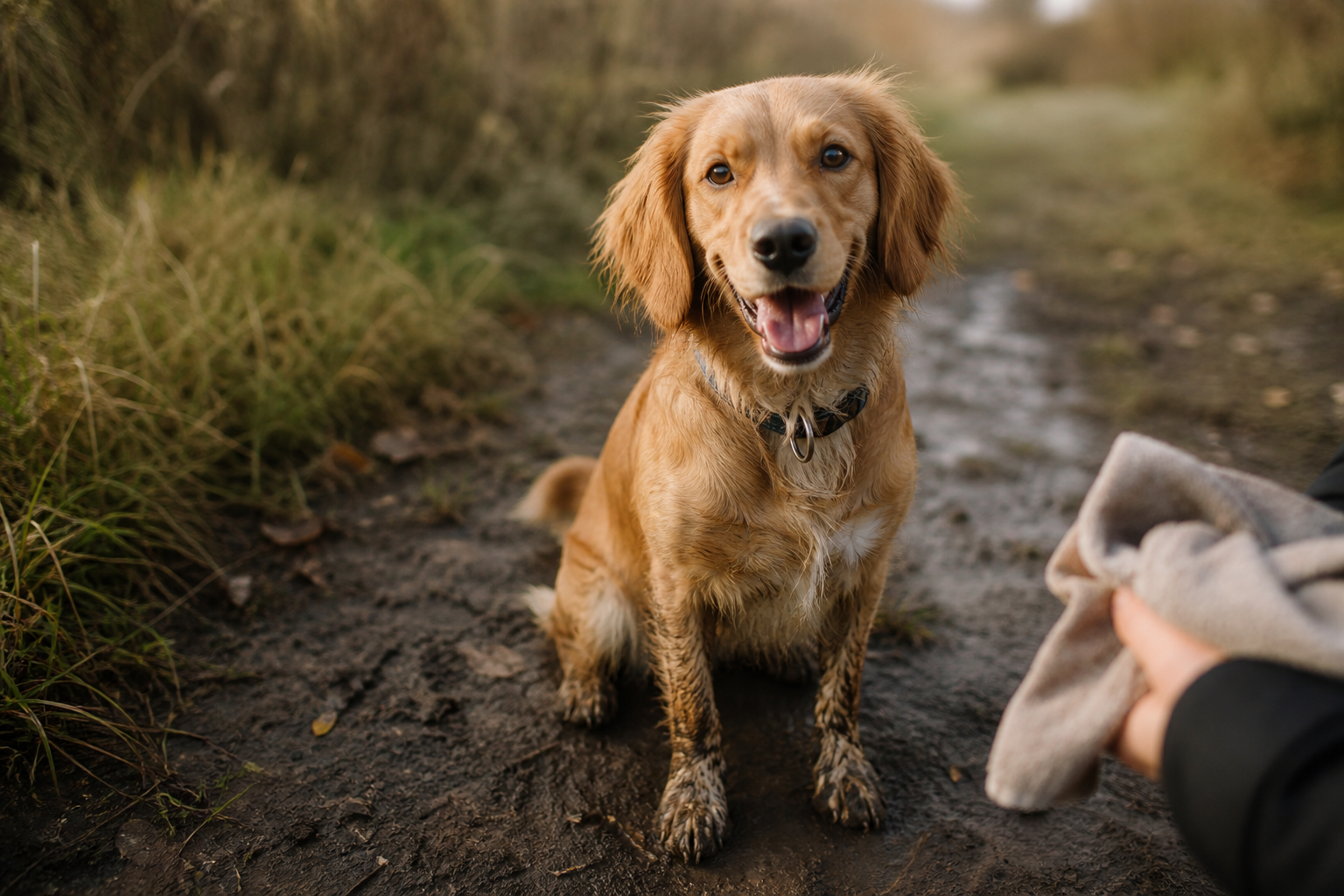
Muddy paws are part of the deal when you live with a dog — but they do not have to mean dirty floors, irritated skin, or a stressful clean-up after every walk. With a quick routine and a few smart tools, you can get muddy paws clean in under two minutes without the wrestle.
This guide covers the simplest, gentlest way to clean muddy dog paws after walks, what to keep in your paw-cleaning kit, and the small details that matter most — like checking between the toes and drying properly. We will also note when to skip DIY and call your vet.
The quick paw-cleaning routine
The best paw-cleaning routine is fast, predictable, and stress-free for your dog. Aim for the same spot, same tools, and same order every time so it becomes a habit. A typical post-walk routine takes about 90 seconds:
- Stop at the door — gently ask your dog to wait on a mat before walking through the house.
- Wipe or wash — use a damp towel, paw washer, or pet-safe wipes (more on each below).
- Check between the pads — small stones, grass seeds, and matted mud often hide here.
- Dry thoroughly — wet paws between the toes can lead to irritation if left damp.
- Reward — a quiet “good job” or a small treat builds positive associations.
The towel method (simplest)
For everyday light mud, a damp microfiber towel is more than enough. Keep one folded by the door specifically for paws. Wipe each paw individually, paying attention to the underside and between the pads, then follow with a dry towel. Microfiber holds onto dirt better than regular cotton and dries fast.
Tip: have two towels — one damp for cleaning, one dry for finishing. Wash them together every couple of days.
Paw washers (best for heavier mud)
A paw washer is a small silicone cup with soft bristles inside. You add a little lukewarm water, slide your dog’s paw in, and twist gently — the bristles knock mud off the pads and from between the toes without scrubbing. Most dogs adjust to it within a few uses.
Paw washers are excellent for heavily muddy paws, sandy beach walks, and post-rain walks. They are not great for very small breeds with tiny paws, or for dogs with severe paw sensitivity. Use lukewarm water — never hot — and dry thoroughly after.
Pet-safe wipes (best for travel and quick touch-ups)
Pet-safe paw wipes are ideal when you are out and about, in the car, or just need a quick touch-up. Look for fragrance-free, alcohol-free wipes specifically marketed for pets — human baby wipes often contain ingredients (like fragrances or essential oils) that can irritate canine skin.
Do not rely on wipes alone for heavy mud — they are a finishing tool, not a deep clean. And avoid wiping inside the mouth, eyes, or nose area.
Checking between the paw pads
This is the step most owners skip — and the one that matters most. Mud, grass seeds, ice melt, road salt, and tiny pebbles all hide between the toe pads where they can cause irritation. After cleaning, gently spread your dog’s toes and check each gap. If your dog tolerates it, this is a good moment to look for cracks, redness, or small cuts on the pads themselves.
Drying paws properly
Wet paws are not just messy — they are a setup for irritation if your dog walks around damp for hours. After cleaning:
- Pat (do not rub) each paw dry with a clean towel.
- Pay extra attention between the toes — that is where moisture lingers longest.
- Long-haired breeds may need a few extra seconds; the fur between the toes traps water.
If your dog has frequent moisture-related issues, talk to your vet about whether a paw balm or a small trim of the toe-fur would help.
Preventing muddy paw prints in the house
A few simple habits keep your floors much cleaner without changing your walks:
- Have a paw mat by every door your dog uses — train them to pause there first.
- Keep your kit visible — towel, washer, wipes, and treats all in one basket by the door.
- Rinse paws on rainy days even if you do not see obvious mud — fine wet dirt is invisible until it is on your sofa.
- Trim long fur between the pads seasonally, especially before muddy seasons — less fur means less mud carried inside.
When paw irritation or injury needs a veterinarian
Most muddy-paw clean-ups are uneventful, but contact your veterinarian if you notice any of the following:
- Persistent licking or chewing of one paw.
- Swelling, redness, or warmth in any paw or pad.
- Cracks or cuts that do not seem to heal.
- Bleeding or limping after a walk.
- Strong odour or visible discharge between the toes.
These can indicate an embedded foreign object, an infection, or a skin condition that needs proper care. Do not self-medicate paw issues — what looks like mild irritation can be allergies, fungal infection, or trauma, and a vet can tell the difference quickly.
A simple paw-cleaning kit checklist
Keep these together by the door so cleaning is never a chore to find supplies for:
- One damp microfiber towel and one dry towel.
- A paw washer (silicone cup with soft bristles).
- Pet-safe, fragrance-free wipes for travel.
- A small basket or hook to hold everything in one spot.
- A few small training treats for positive reinforcement.
- Optional: a paw balm if your dog’s pads dry out in winter.
The takeaway
Cleaning muddy dog paws becomes effortless once you have a routine and the right basic kit. Towel for light mud, paw washer for heavy mud, wipes for travel — and always check between the pads and dry thoroughly. Train your dog to pause at the door for a few seconds, and the rest will become second nature for both of you.





 Food & Nutrition
 Treats & Chews
 Toys
 Beds & Furniture
 Bowls, Feeders & Hydration
 Collars, Leashes & Harnesses
 Crates, Carriers & Travel
 Apparel & Accessories
 Grooming
 Health & Wellness
 Training & Behavior

 Food & Treats
 Litter & Cleanup
 Toys
 Trees & Scratchers
 Beds & Furniture
 Bowls & Feeders
 Health & Wellness
 Collars, Harnesses & Apparel
 Carriers & Travel