Summer brings the sunshine your horse loves — and a long list of small care changes you should not skip. Heat, flies, dust, and dry footing all add stress that can show up as dehydration, weight loss, hoof issues, or worse. The good news: a steady seasonal routine handles almost all of it.
This guide walks you through the essentials of summer horse care — water, shade, turnout timing, grooming, flies, hoof care, electrolytes, and the warning signs that mean it is time to call your veterinarian. Use it as a checklist when temperatures climb.
Water and hydration come first
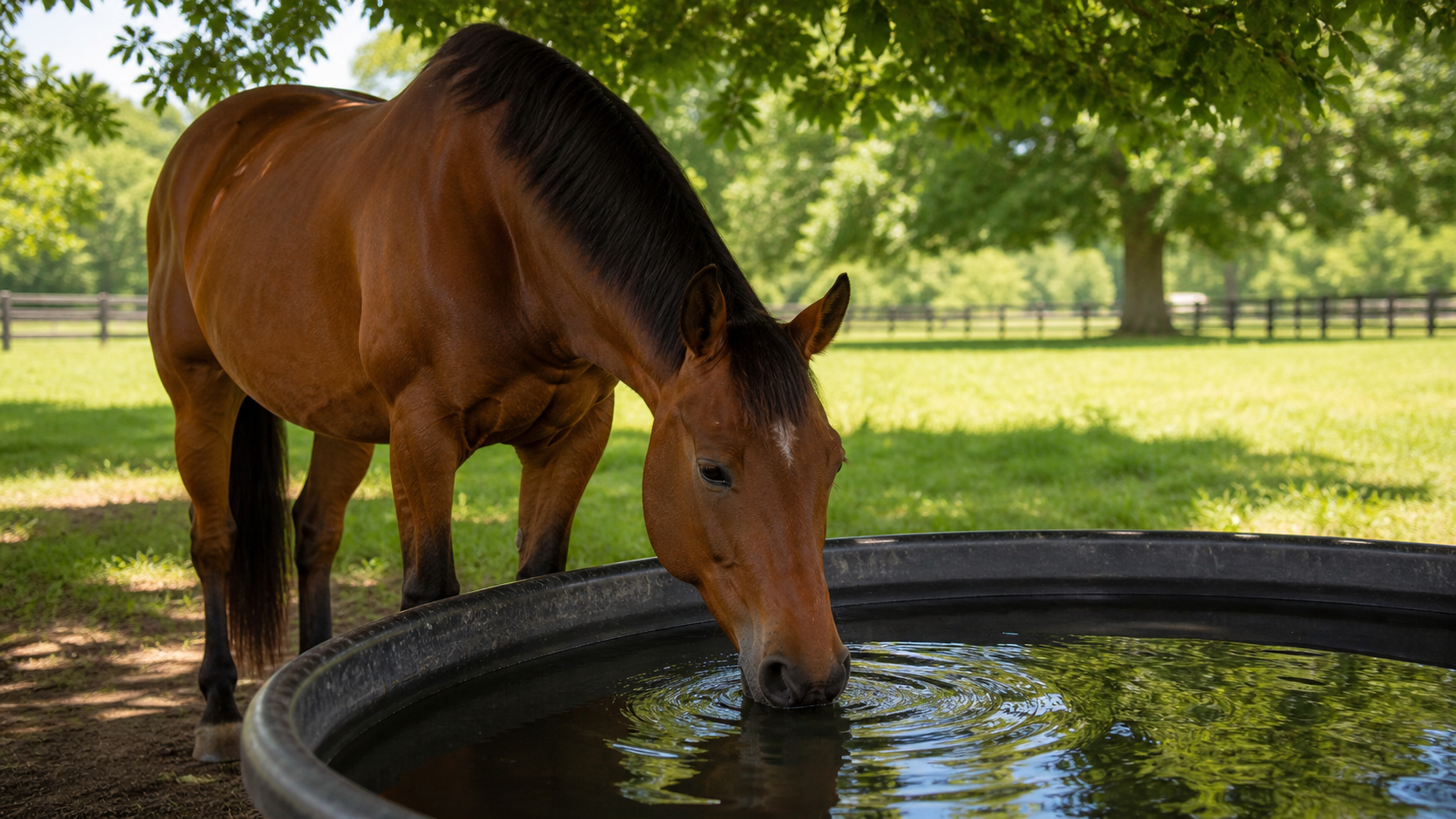
Horses drink 5–15 gallons of water on a normal day — and significantly more when it is hot, when they are working, or when they eat dry hay. In summer, water is the first thing to manage and the easiest thing to get wrong.
- Check water buckets and troughs at least twice daily
- Scrub them weekly to keep them clean and algae-free
- Offer cool (not icy) water before, during, and after exercise
- Provide free-choice salt to encourage drinking
If your horse drinks noticeably less, becomes lethargic, or shows tacky gums or sunken eyes, contact your veterinarian. Dehydration is serious.
Shade, ventilation, and the right time of day
A shaded paddock or run-in shed is essential. If your horse is stalled during the day, make sure barn airflow is good — open windows, equine-safe fans on cross-ties, and clean stalls all help.
Heat builds fastest between 11 a.m. and 4 p.m. When you can, plan turnout around the cooler parts of the day — overnight turnout with mid-day in, or split turnout (early morning + evening). For light-skinned horses (paint, pinto, palomino), sun protection on the muzzle and around the eyes helps prevent painful sunburn.
Adjust exercise and turnout timing
Move riding and lunging to early morning or evening, and keep sessions shorter than usual. If you must work midday: warm up briefly, focus on the goal, cool down longer. Watch breathing — a horse that does not recover within a few minutes of stopping is too hot. If your horse refuses to move, breathes hard at rest, or stumbles after exercise, stop immediately and call your veterinarian.
Summer grooming basics
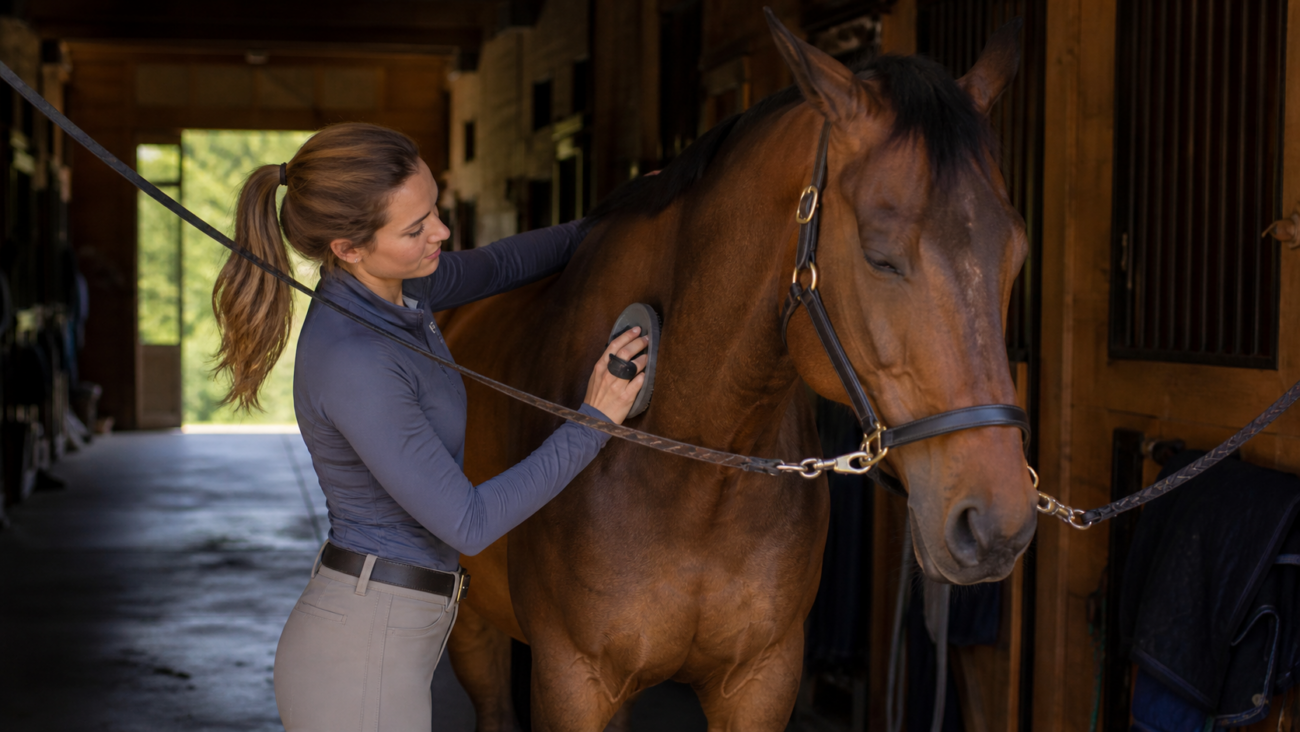
Daily grooming in summer is more important, not less. Sweat, dust, and dried fly spray build up on the coat and can cause irritation if left.
- Quick curry to lift dust and dried sweat
- Finishing brush to distribute coat oils
- Wipe sweat marks off the saddle area with a damp cloth
- Hose or sponge horses after hard work, then sweat-scrape and walk dry
Daily rinses with clean water keep the coat healthy without stripping natural oils. Save the shampoo for longer baths every couple of weeks.
Fly and insect control
Flies make summer miserable for horses, and bites can lead to skin reactions, eye irritation, and stress. A layered plan works best:
- Fly mask for turnout (correctly fitted, ears free, eyes not in contact)
- Fly sheet for horses bothered by midges and biting flies
- Fly spray applied lightly before work — patch test first
- Stable management — clean manure, fresh water, ventilation
If your horse develops welts, raw skin, or persistent eye discharge from insect bites, contact your veterinarian.
Hoof care in dry months
Dry summer ground hardens hooves and can cause cracks; wet-dry cycles (hose-down → bake in sun) make this worse. Pick out hooves at every check-in, watch for cracks, soft spots, or heat, and keep your farrier on a regular 6–8 week schedule. For any new lameness, hoof crack, or unusual sensitivity, consult your farrier and your veterinarian.
Electrolytes — when they help and when they do not
Electrolytes are minerals your horse loses through sweat. They can support recovery for working horses on hot days, but they are not a substitute for water.
- Free-choice salt should be available year-round
- A measured electrolyte supplement may help horses sweating heavily during competition or hard summer work
- Never give electrolytes to a dehydrated horse before they have started drinking again
- Check with your veterinarian or equine nutritionist before adding daily electrolytes for an idle horse
Heat stress warning signs — call your vet
Heat stress can move from mild to dangerous fast. Know the early signs:
- Heavy or rapid breathing that does not slow within minutes after stopping
- Profuse, foamy sweating — OR sweating that suddenly stops in a hot horse
- Dark, tacky gums; slow capillary refill
- Lethargy, confusion, stumbling
- Refusing food or water
- Body temperature over 104°F (40°C)
Move the horse to shade, hose with cool water (especially neck, chest, and inner legs), offer cool water in small sips, and call your veterinarian immediately. Heat stroke is a medical emergency.
A simple summer routine
- ✅ Water buckets full and clean
- ✅ Fly mask on for turnout
- ✅ Shade and ventilation checked
- ✅ Daily grooming — extra attention to sweat areas
- ✅ Hoof pick + crack check
- ✅ Exercise in the cooler hours
- ✅ Cool-down + sweat scrape after work
- ✅ Anything unusual → call vet/farrier
FAQ
How much water does a horse drink in summer?
Most healthy horses drink 5–15 gallons a day in cooler weather; in summer, working horses can drink 20+ gallons. Always provide unlimited fresh, cool water.
Should I clip my horse in summer?
Most healthy horses do not need a clip in summer. Slow shedders or older horses with Cushing’s-related coats may benefit from a clip — discuss with your veterinarian first.
Are barn fans safe?
Yes — heavy-duty, sealed-motor equine fans are very helpful for ventilation. Mount them out of reach of horses, run cords safely, and replace any with frayed wires immediately.
Can I leave a fly mask on overnight?
Most modern fly masks are designed for 24/7 wear, but check fit twice a day for rubs and remove regularly to clean. Eyes should always be free of contact with the mask material.
When is it too hot to ride?
A common rule of thumb: add the temperature (°F) and the humidity (%). Under 130 is generally safe; 130–150 use caution; above 150 the body cannot cool itself effectively — light ground work only, or skip the session.
The takeaway
Summer is hard on horses, but a steady routine — water first, shade always, exercise in the cool hours, fly protection, and quick action if something looks off — keeps most horses comfortable and healthy through the hottest months. When in doubt, call your veterinarian.
Browse our Equestrian & Ranch shop for fly masks, sheets, sprays, and stable essentials, or explore more horse guides on the Petrending blog.





 Food & Nutrition
 Treats & Chews
 Toys
 Beds & Furniture
 Bowls, Feeders & Hydration
 Collars, Leashes & Harnesses
 Crates, Carriers & Travel
 Apparel & Accessories
 Grooming
 Health & Wellness
 Training & Behavior

 Food & Treats
 Litter & Cleanup
 Toys
 Trees & Scratchers
 Beds & Furniture
 Bowls & Feeders
 Health & Wellness
 Collars, Harnesses & Apparel
 Carriers & Travel