Walk into any feed store and you will see shelves of products promising shinier coats, better hooves, calmer minds, and longer lives. Some help. Most do not. The truth is that horse nutrition is mostly about getting the basics right — and the basics are simpler than the marketing suggests.
This guide covers hay, grain, water, salt, and supplements in plain terms. When in doubt about your horse’s specific needs, your veterinarian or an equine nutritionist is worth every penny.
Forage first — hay quality matters most
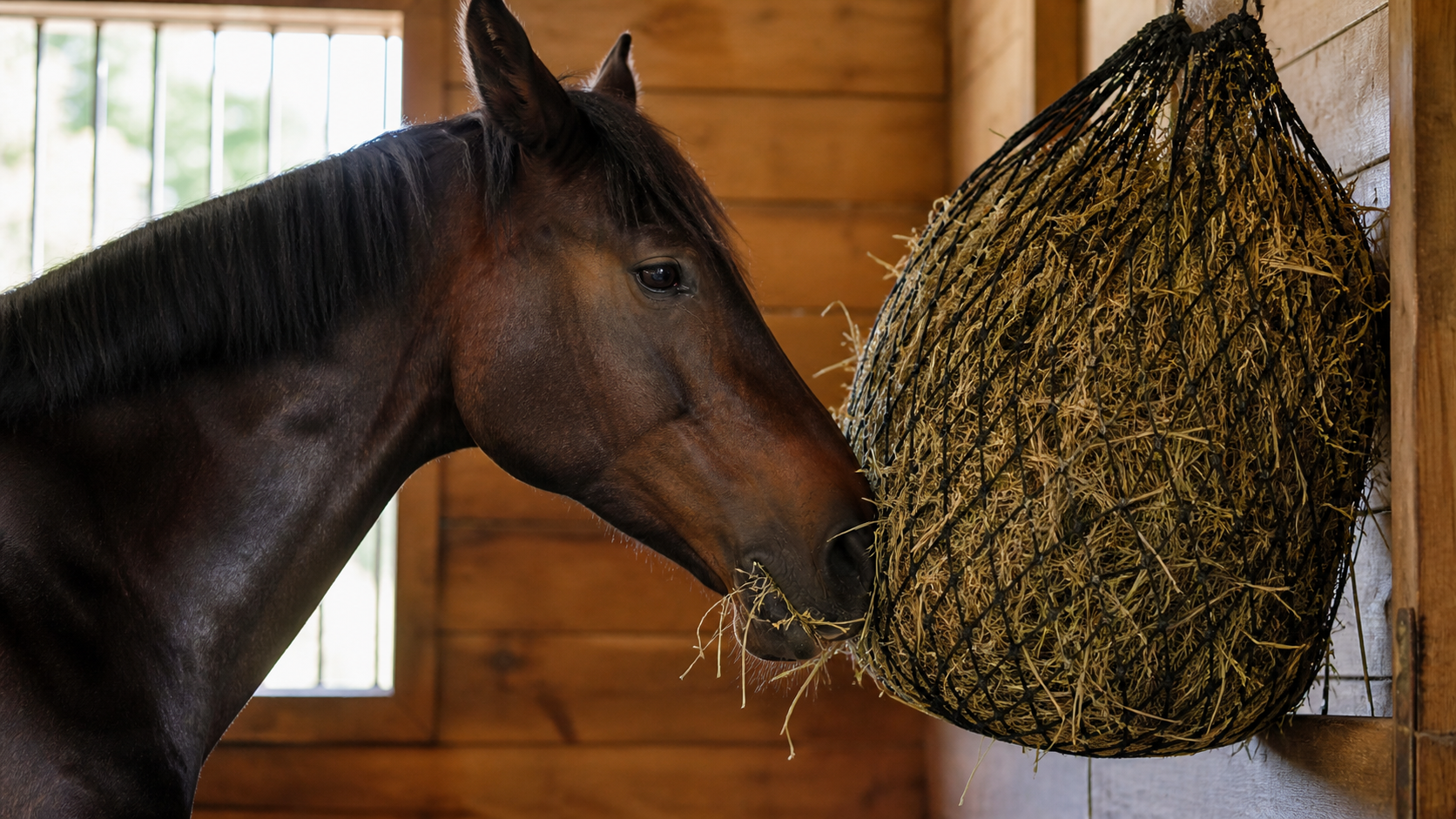
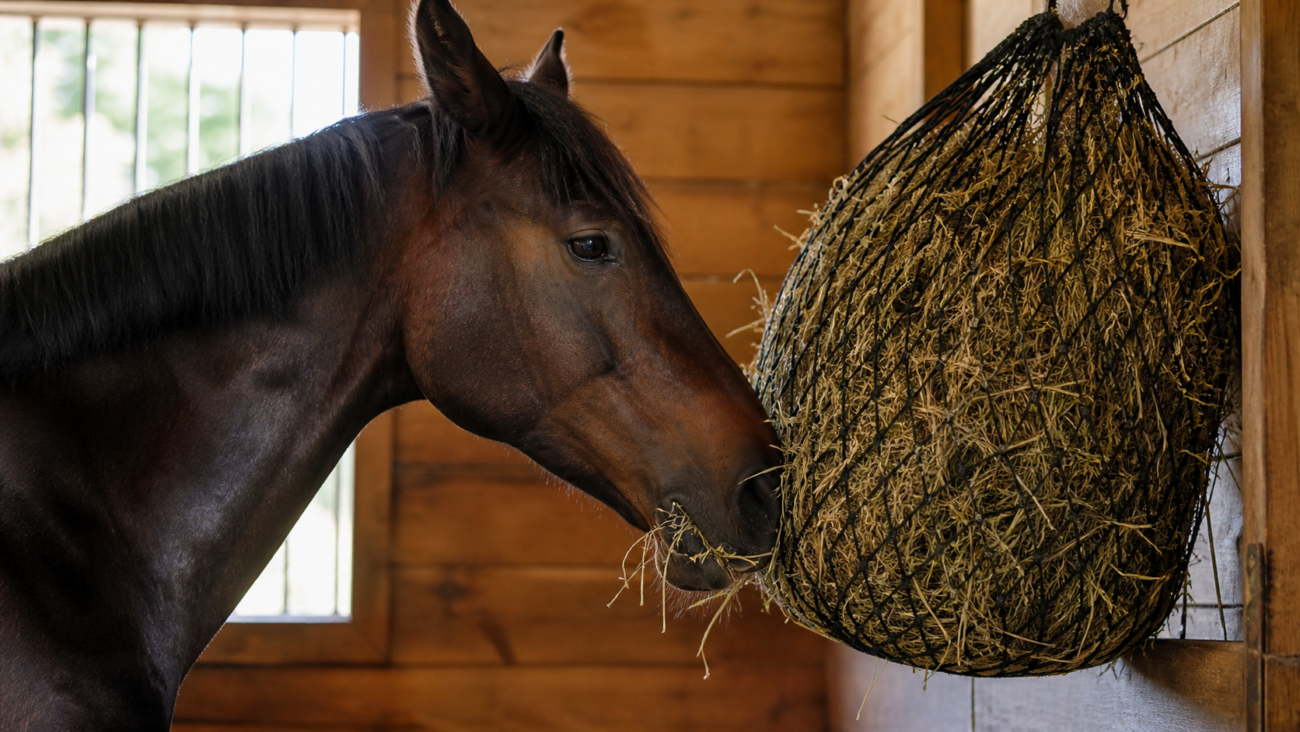
Horses are designed to graze almost continuously. Their digestive systems work best when forage (pasture or hay) is the foundation of every meal.
For most healthy adult horses:
- Daily intake: 1.5–2.5% of body weight in forage
- A 1,000 lb horse typically needs 15–25 lbs of hay per day
- Free-choice or split into 2–4 feedings is ideal
Hay quality varies hugely. Look for green color, soft texture, sweet smell, and minimal dust. Avoid hay with mold, weeds, or visible blister beetles. Buy from reliable suppliers and store hay properly off the ground.
Concentrates and grain
Grain or concentrates (commercial feeds) supplement forage when extra calories or specific nutrients are needed. Most healthy adult horses on good hay and at light work do not need much grain at all.
You may need concentrates if:
- Your horse is in heavy work or competition
- The horse is older and needs senior feed
- The horse is underweight or hard to keep weight on
- The horse has a specific medical or nutritional condition (per vet)
If you do feed concentrates, follow the bag’s recommendations and your vet’s advice. Splitting daily grain into 2–3 small meals is healthier than one large feed. Sudden changes in feed are a major cause of digestive upset — transition gradually over 7–10 days.
Water — how much and how often
Water is the most underrated part of horse nutrition. A normal horse drinks 5–15 gallons per day, and significantly more in hot weather, during work, or on dry hay.
- Provide clean, fresh water at all times
- Scrub buckets and troughs weekly
- In freezing weather, break ice or use heated buckets
- Cool (not icy) water after exercise
Reduced water intake is one of the earliest signs something is wrong. If your horse is drinking noticeably less for more than a day, contact your veterinarian.
Salt and minerals
Horses need salt year-round, especially in hot weather and after work. Provide a free-choice salt source:
- White salt block in a holder
- Loose salt in a separate feeder
- Mineral blocks (red or trace mineral) for areas with mineral deficiencies
Most horses self-regulate salt intake. If your horse seems uninterested in available salt during heavy summer work, ask your veterinarian whether a measured electrolyte supplement is appropriate.
Supplements — when they help and when they do not
Supplements are everywhere. Many are good products. Many are not necessary. Common reasonable supplements (with vet input):
- Joint support for older or harder-working horses
- Hoof support (biotin) for chronically poor hoof quality
- Digestive support for horses prone to ulcers or stress
- Vitamin E / selenium in regions with deficient soil
Do not stack multiple supplements without checking for overlap or excess — too much can be harmful. Discuss supplement plans with your vet or an equine nutritionist before starting.
Body condition scoring (1–9)
The Henneke Body Condition Score is a 1–9 scale veterinarians use to evaluate horse weight:
- 1–3: underweight (visible ribs, sunken hindquarters) — call vet
- 4–6: healthy range
- 7–9: overweight (heavy fat deposits) — adjust feed and consult vet
Most healthy horses sit between 5 and 6. Check your horse’s condition monthly — feel ribs lightly under the coat, look at the topline, hips, and shoulder.
Adjusting for age and workload
- Young growing horses: need protein and balanced minerals — special feeds available
- Performance horses: may need higher-calorie feeds and more electrolytes
- Senior horses: need senior feeds (easier to chew, formulated for older digestion)
- Easy keepers: may need restricted forage or lower-starch feeds
- Hard keepers: may need extra calories from oil or specific feeds
Every horse is different. Your veterinarian can recommend a feeding plan tailored to your horse’s age, breed, workload, and health.
Common feeding mistakes
- Sudden changes in hay or grain (causes colic risk)
- Treating supplements as a substitute for good hay
- Free-feeding rich pasture without restriction
- Skipping water buckets in cold weather
- Feeding moldy or dusty hay
- Not weighing feed (using scoops as if they are pounds)
When to call a vet or equine nutritionist
Always call your veterinarian for:
- Refusing food or water
- Sudden weight loss
- Signs of colic (rolling, kicking belly, sweating)
- Choke (coughing while eating, food coming from nose)
- Persistent loose manure
- Major behaviour change
For complex feeding plans (older horses, performance horses, metabolic conditions like Cushing’s or insulin resistance), an equine nutritionist can build a plan with your vet’s input.
A simple feeding routine
- ✅ Quality hay split into 2–4 feedings
- ✅ Fresh, clean water always
- ✅ Free-choice salt
- ✅ Concentrates only as needed (vet-guided)
- ✅ Slow transitions (7–10 days)
- ✅ Monthly body condition check
- ✅ Anything unusual? Call vet
FAQ
How much hay should I feed per day?
For most adult horses, 1.5–2.5% of body weight in forage daily — typically 15–25 lbs of hay for a 1,000 lb horse. Adjust based on pasture access, body condition, and workload.
Does my horse need grain?
Many healthy adult horses on good hay at light workloads do not need any grain. Grain is for extra calories or specific nutritional needs — not a default. Discuss with your vet.
How do I switch hay or feed safely?
Always transition gradually over 7–10 days. Mix the new with the old, slowly increasing the new percentage. Sudden changes are a major cause of colic.
Can I feed treats every day?
Small amounts of horse-safe treats (carrots, apples, commercial horse treats) are fine. Avoid sugar-rich human treats, moldy fruit, or anything in large quantities. Some horses with metabolic conditions need treat restrictions — ask your vet.
What signs mean my horse’s diet needs adjusting?
Weight loss, dull coat, low energy, slow eating, behaviour changes, or sudden loose manure all suggest something is off. Call your veterinarian for guidance.
The takeaway
Horse feeding is simpler than the marketing makes it look: forage first, water always, salt year-round, grain only when needed, supplements with vet input. Browse our Equestrian & Ranch shop for feeding gear, or explore more horse guides on the Petrending blog.





 Food & Nutrition
 Treats & Chews
 Toys
 Beds & Furniture
 Bowls, Feeders & Hydration
 Collars, Leashes & Harnesses
 Crates, Carriers & Travel
 Apparel & Accessories
 Grooming
 Health & Wellness
 Training & Behavior

 Food & Treats
 Litter & Cleanup
 Toys
 Trees & Scratchers
 Beds & Furniture
 Bowls & Feeders
 Health & Wellness
 Collars, Harnesses & Apparel
 Carriers & Travel