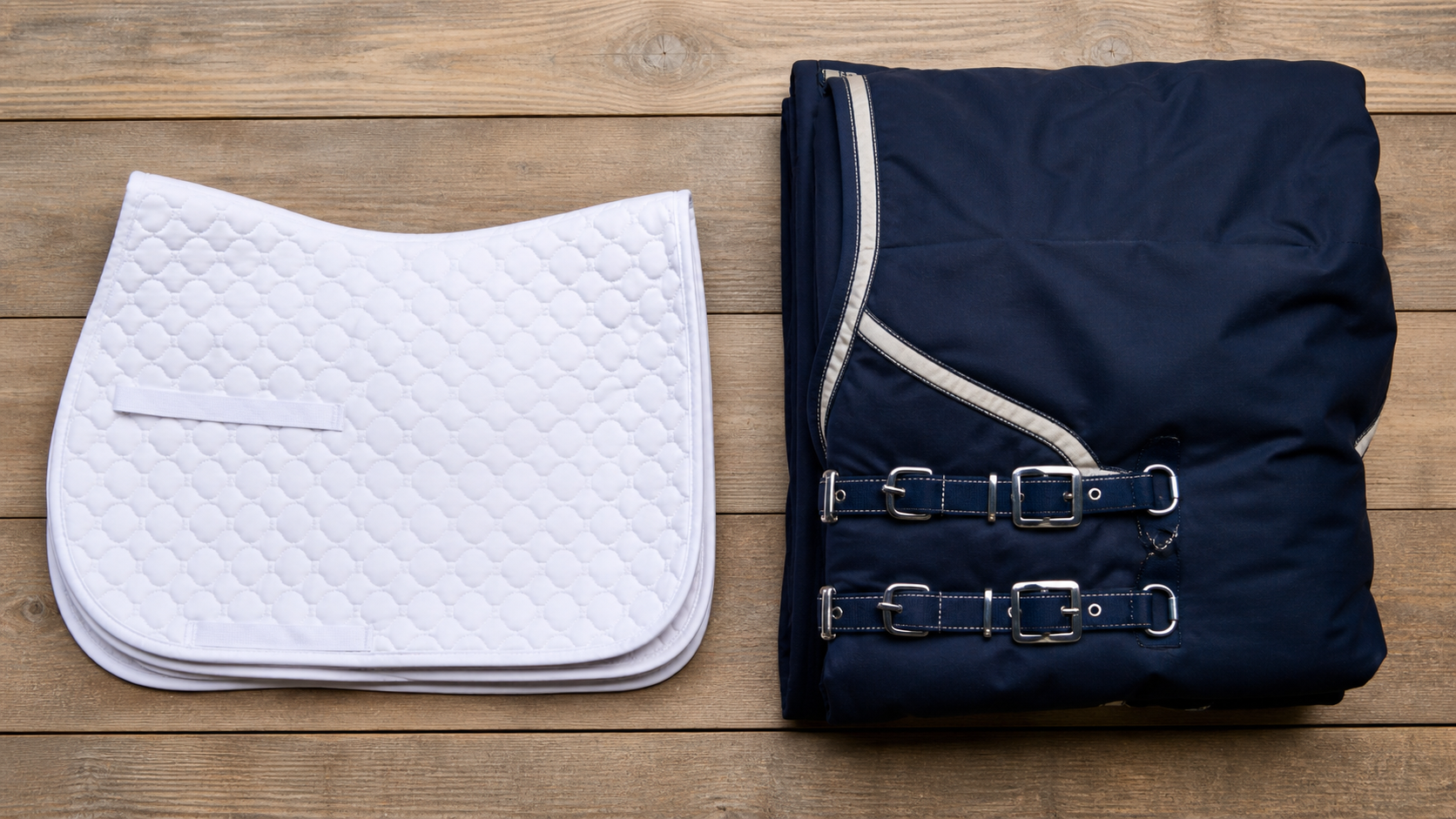
It is one of the first questions new horse owners ask: are saddle pads and horse blankets the same thing? They are not. They serve different purposes, are sized differently, and live in completely different parts of your horse’s gear collection.
This quick guide explains the difference, when to use each, and the small details that trip up beginners.
The simple difference
- Saddle pad: goes under the saddle, only when you ride. It cushions and absorbs sweat.
- Horse blanket (or sheet): goes over the horse’s body, when not riding. It provides warmth, weather protection, or fly coverage.
If you only remember one thing, remember that.
Saddle pads — what they do
A saddle pad sits between the saddle and your horse’s back. Its job:
- Absorb sweat (protects the saddle leather)
- Cushion small irregularities between saddle and back
- Keep the saddle clean
- Provide minor shock absorption
A saddle pad does not fix a poorly fitting saddle. If your horse needs unusual padding to make a saddle “work,” call a professional saddle fitter.
Saddle pad types
- Square pad — basic and affordable, common in English disciplines
- Contoured pad — shaped to follow saddle and spine
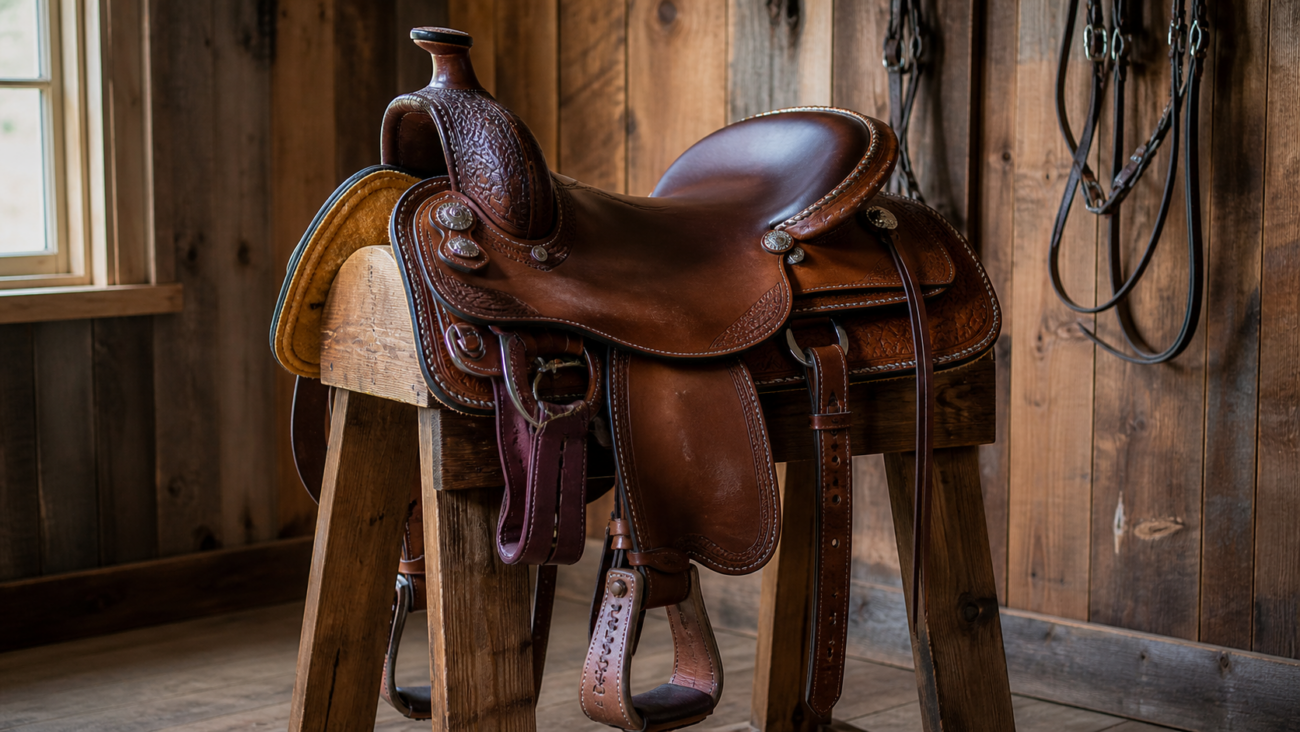
- Western pad — typically thicker, blanket-style under the saddle
- Half-pad / corrective pad — extra cushioning, used with care under fitter guidance
Most saddle pads are made of cotton, fleece, wool, or technical synthetics.
Horse blankets — what they do
A horse blanket (sometimes called a rug) covers the horse’s body when they are not being ridden. Different blankets serve different purposes:
- Sheet: single layer, no insulation — protection from rain, wind, dust, flies
- Lightweight blanket: 50–100g fill — cool nights, mild days
- Midweight: 150–200g fill — cold but not frigid
- Heavyweight: 250g+ fill — deep cold, especially for clipped horses
- Fly sheet: mesh or light fabric — insect protection
- Cooler / Wicking sheet: draws sweat off after riding
For a deeper blanket guide, see our Horse Blankets & Sheets: What Beginners Should Know (coming soon).
Sizes and how each is measured
Saddle pads: sized to match your saddle. Common labels are pony, cob, full (English), or by inches in western. Measure your saddle from gullet plate to back edge.
Horse blankets: sized to your horse’s body. Measure from the center of the chest, around the shoulder, to the point of the rump. Most adult horses take 72″–82″.
The two sizing systems are completely independent — your blanket size has nothing to do with your saddle pad size.
Materials side-by-side
| Saddle pads |
Blankets |
| Cotton, fleece, wool, gel inserts |
Polyester shell, polyfill insulation, mesh |
| Soft and absorbent |
Tough, weatherproof, breathable |
| Washed weekly when ridden |
Washed seasonally |
When to use which
- Riding? Saddle pad goes on first, then saddle. Always.
- Cold weather, not riding? Horse blanket — pick weight based on temperature and horse’s coat.
- Wet weather, turnout? Waterproof turnout sheet or blanket.
- After a hard, sweaty ride in cool weather? Cooler/wicking sheet to dry the horse safely.
- Fly season? Fly sheet — lightweight mesh for insect protection.
Never put a saddle pad on instead of a blanket — saddle pads will not keep your horse warm in turnout.
Care and washing
Saddle pads:
- Brush off after every ride
- Wash weekly during regular riding
- Air dry — never tumble dry (heat shrinks materials)
Blankets:
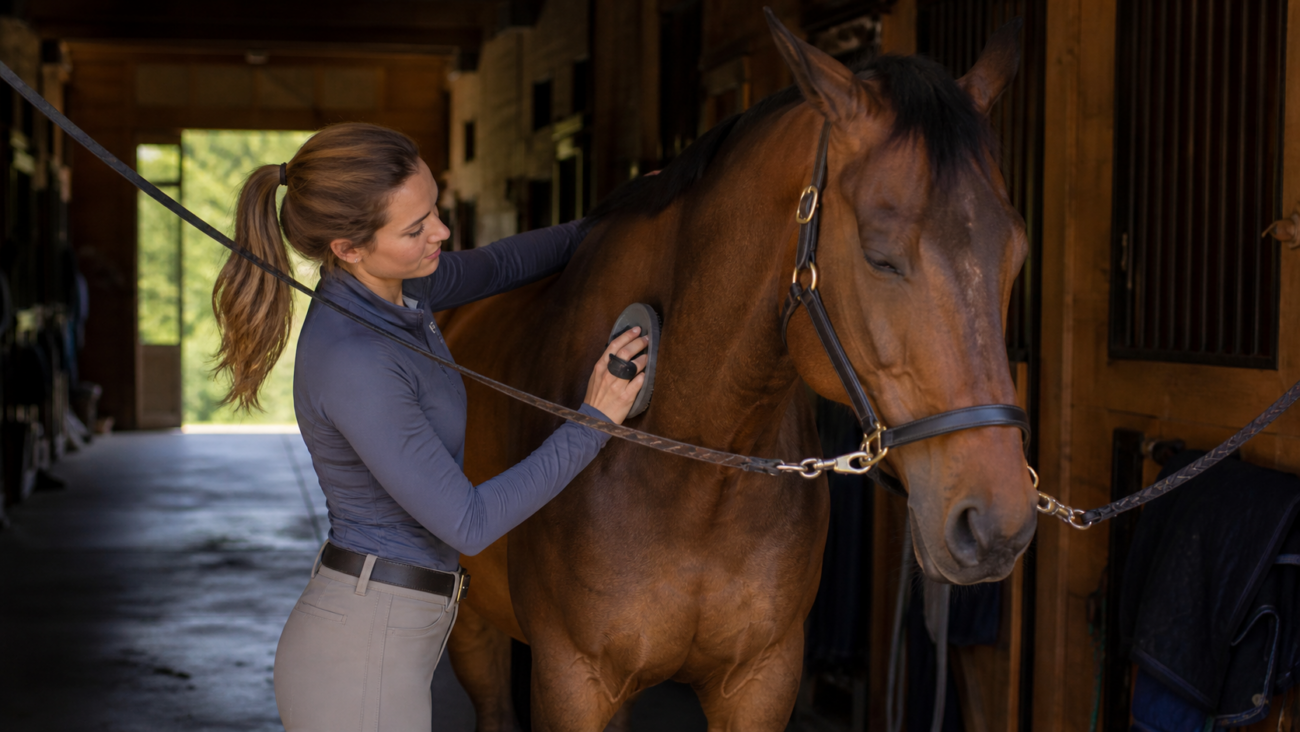
- Brush off dirt and sweat after each use
- Wash 1–2 times per season at home or via professional blanket cleaner
- Reproof waterproofing annually
- Store dry and clean in sealed bins
Common mix-ups beginners make
- Buying a saddle pad to “make the saddle fit” — get a fitter instead
- Layering multiple saddle pads — usually adds bulk and pressure points, not cushioning
- Riding in a stable blanket “for warmth” — never; blankets are not for riding
- Putting a blanket on a sweaty horse — chills the body
- Buying a heavy blanket for a horse that does not need one — over-blanketing causes overheating
FAQ
Can I ride in a turnout sheet or blanket?
No. Blankets are not designed for the saddle area. Use a saddle pad under the saddle, and unblanket the horse first.
Do I need different saddle pads for English and Western?
Yes — they are shaped differently. English saddle pads are cut for close-contact saddles; western pads are larger and thicker for the heavier western saddle.
How thick should a saddle pad be?
Just thick enough to absorb sweat and cushion small variations. Excessive thickness (over an inch in most cases) usually changes saddle fit and creates problems.
Can a horse share saddle pads between rides?
You can re-use the same pad, but wash regularly. Sweat and salt build up, and dirty pads cause skin irritation. Have at least 2 pads in rotation.
Is a fleece pad warmer for the horse in winter?
It is slightly warmer under the saddle, but the difference is minor and fleece can hold sweat. The horse’s body warmth comes from the blanket they wear when not ridden, not the saddle pad.
The takeaway
Saddle pads and horse blankets do completely different jobs and live in different parts of your gear closet. Pads cushion; blankets warm or protect. Browse our Equestrian & Ranch shop for both, or explore more horse guides on the Petrending blog.






 Food & Nutrition
 Treats & Chews
 Toys
 Beds & Furniture
 Bowls, Feeders & Hydration
 Collars, Leashes & Harnesses
 Crates, Carriers & Travel
 Apparel & Accessories
 Grooming
 Health & Wellness
 Training & Behavior

 Food & Treats
 Litter & Cleanup
 Toys
 Trees & Scratchers
 Beds & Furniture
 Bowls & Feeders
 Health & Wellness
 Collars, Harnesses & Apparel
 Carriers & Travel