A well-organized stable saves you time, reduces stress on your horse, and helps you spot problems before they become emergencies. Whether you board at a barn or keep your horse at home, the right basics make every chore quicker.
This checklist covers the stable essentials every horse owner should have within easy reach — from daily cleaning tools to a basic first-aid kit. Build your kit over time; you do not need everything on day one.
Daily cleaning tools
Mucking out is the single most important daily chore. The right tools make it fast and ergonomic.
- Manure fork — fine-tined for shavings, basket-style for straw
- Wheelbarrow — large enough that one trip equals one full stall
- Stiff-bristle broom for aisles, soft for the tack room
- Rake for spreading bedding evenly
- Disinfectant solution for water and feed buckets
Feed and water gear
Clean, properly sized buckets matter more than fancy ones. Plan one feed bucket and one water bucket per stall, plus spares.
- Heavy rubber feed pans that do not tip
- Hanging water buckets with sturdy hooks
- Heated buckets if you face freezing winters
- Measuring scoop for grain (mark your normal portion)
- Salt block holder
Wash buckets weekly, check water levels at every check-in, and never skip the daily refresh.
Hay storage and management
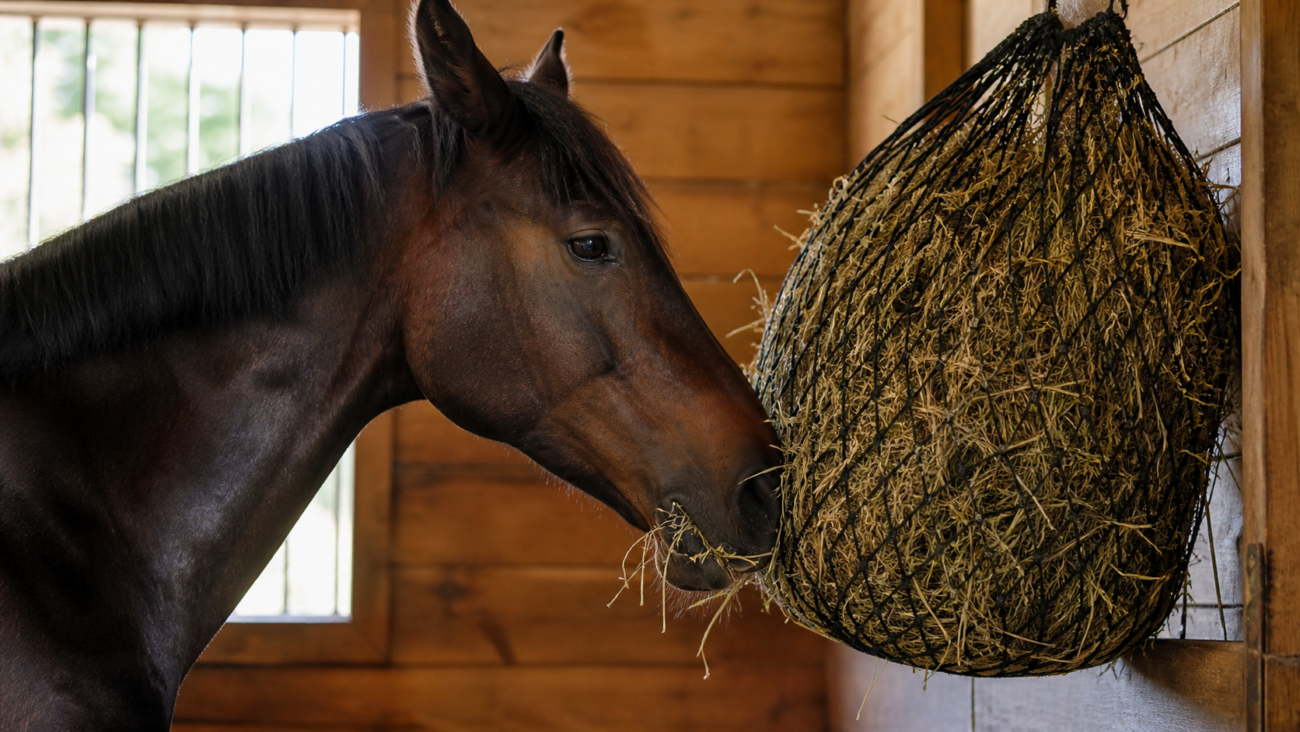
Good hay is one of your biggest expenses — protect it. Store hay off the ground, in a dry, well-ventilated area, ideally separate from the main barn for fire safety. Pallets, tarps, and a roof go a long way.
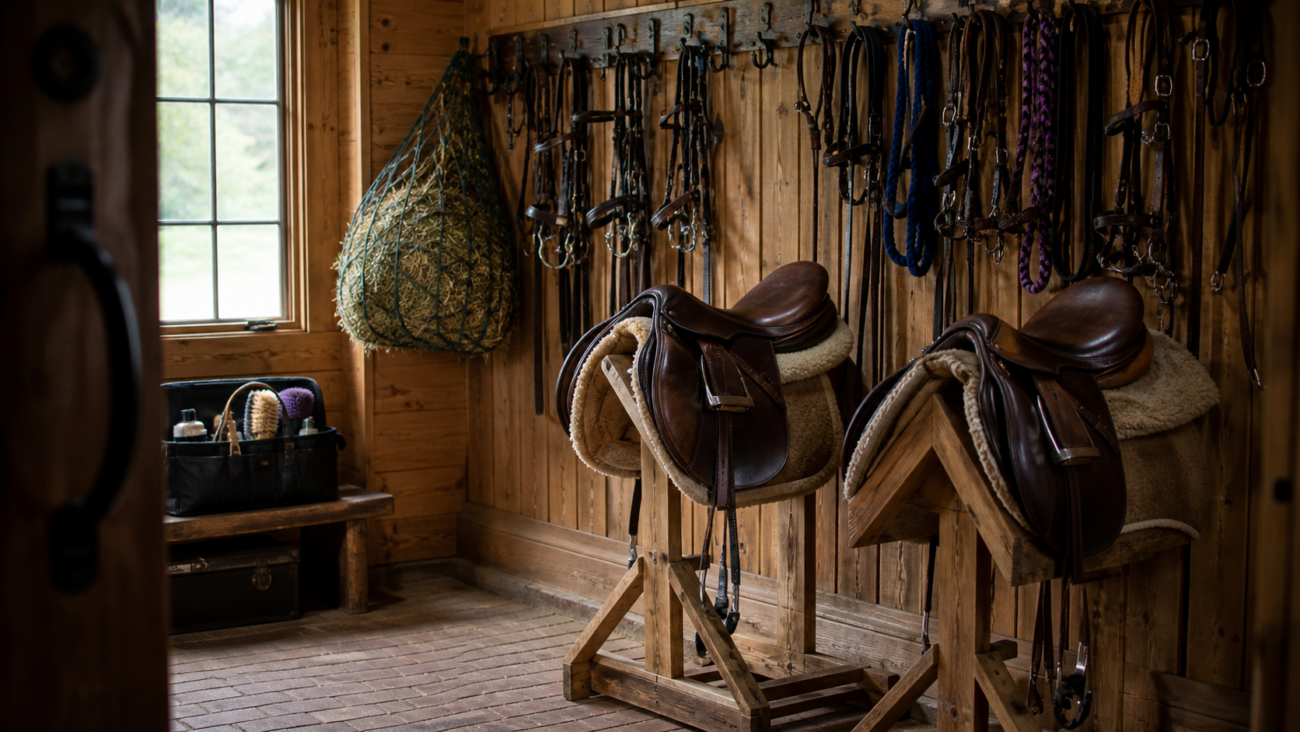
For feeding, slow-feed hay nets extend feeding time and reduce waste. Always check hay for mold, dust, or visible debris before serving.
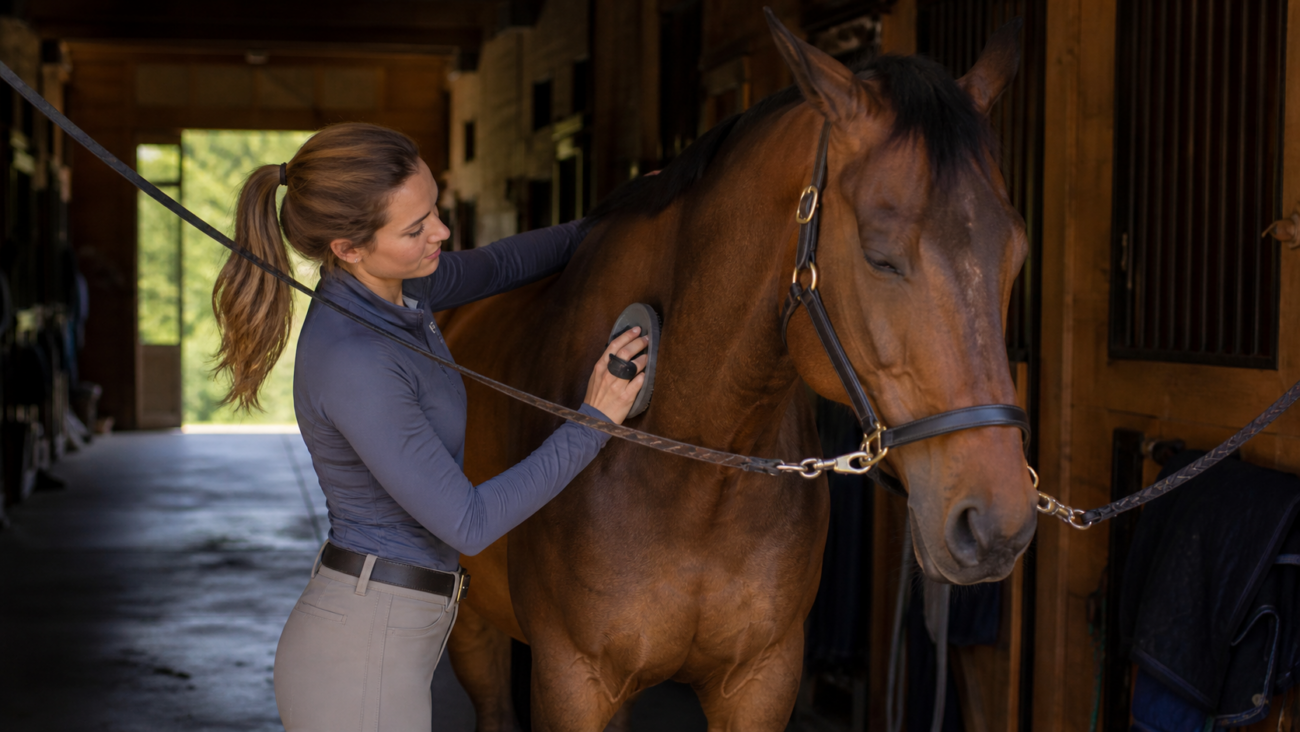
Grooming station basics
Set up a dedicated grooming spot — usually cross-ties in a wide aisle — with a small caddy that holds:
- Curry comb (rubber or jelly-style)
- Hard brush and soft brush
- Hoof pick + brush combo
- Mane and tail comb
- Sweat scraper
- Soft cloths for face and eyes
- Fly spray (read the label, patch test)
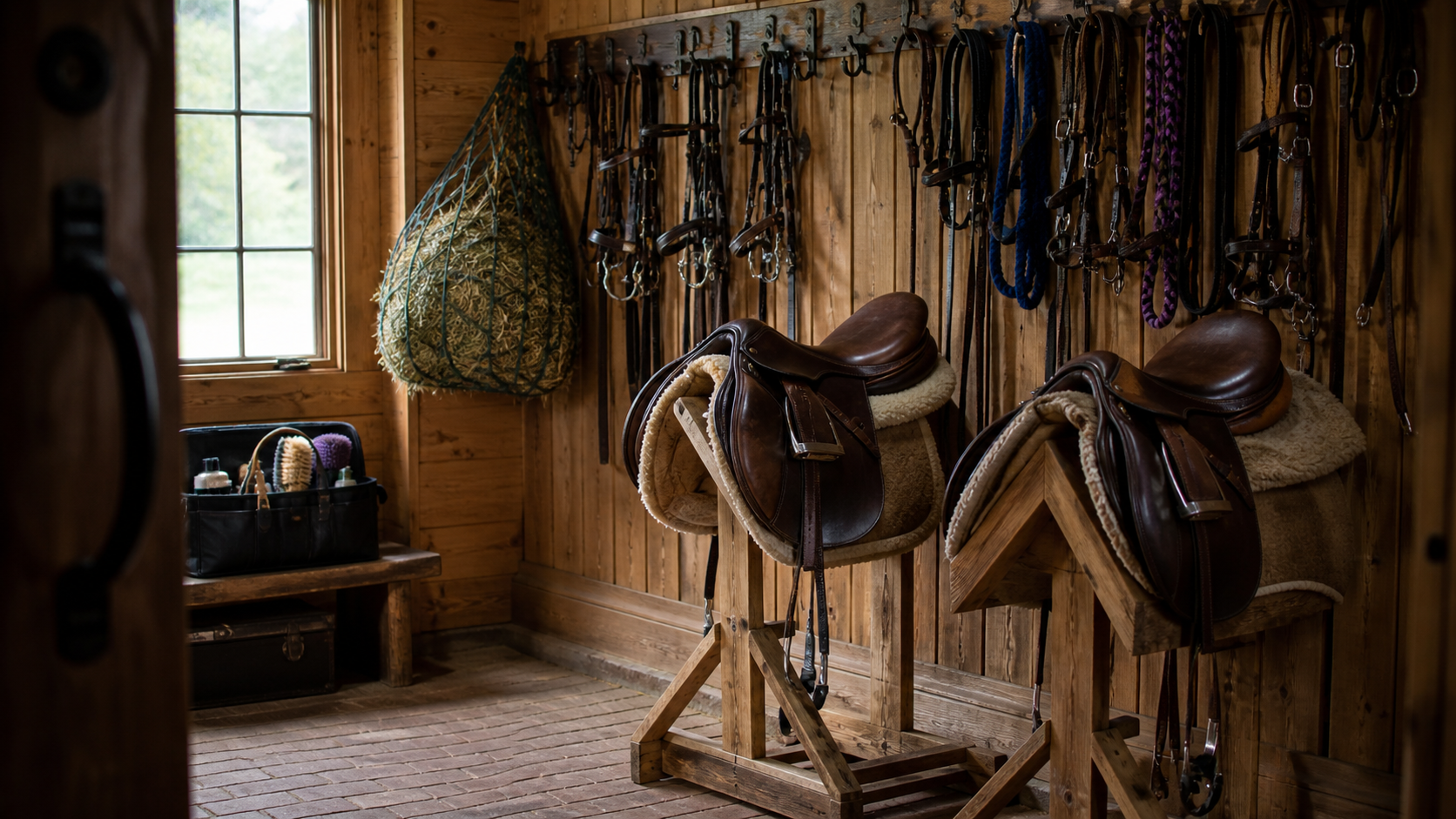
Tack storage and care
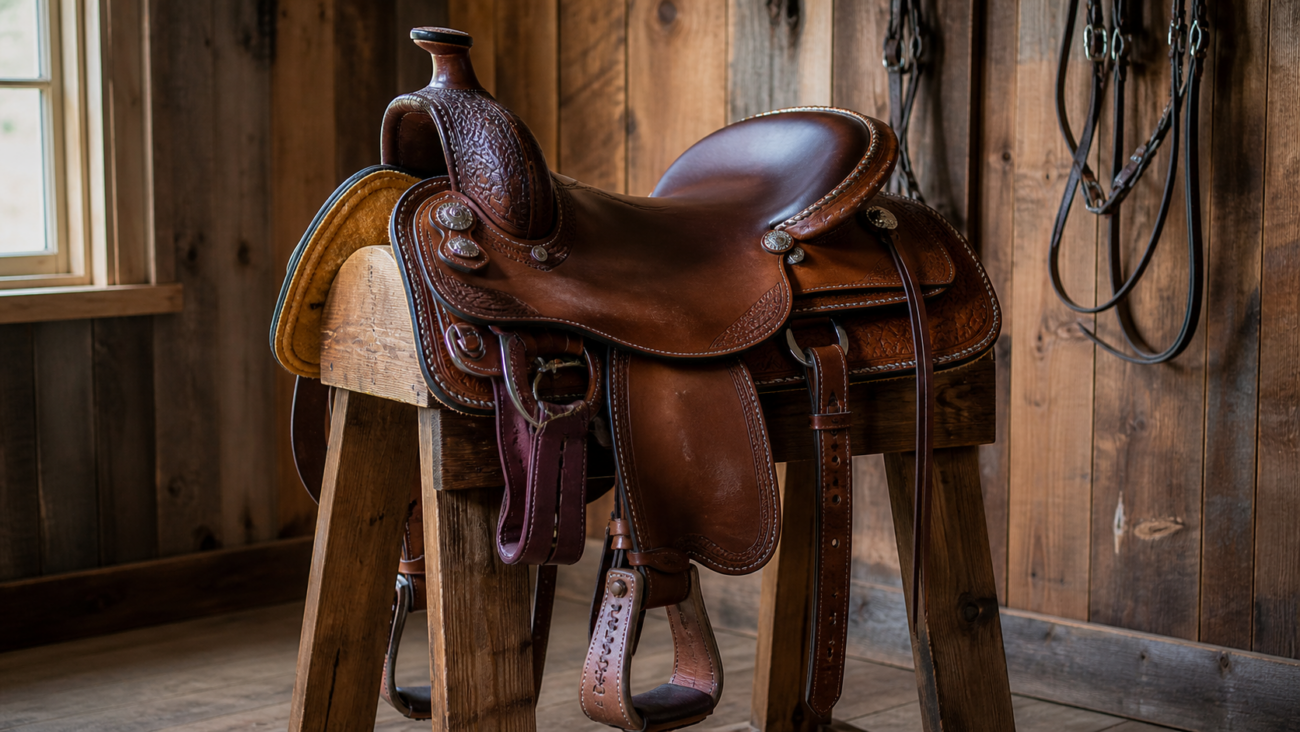
Leather tack lasts decades when cared for properly. Set up:
- Saddle racks (one per saddle, sturdy wall-mounted style)
- Bridle hooks at proper height
- A blanket bar for turnout sheets and stable blankets
- A locking cabinet for fly spray, hoof products, and prescription items
- Saddle soap, leather conditioner, soft sponges
Wipe tack after every ride and condition leather monthly. Saddle fit issues should always be addressed by a professional saddle fitter.
Basic first-aid kit (with vet contact)
Every barn should have a first-aid kit ready before you need it. Discuss exact contents with your veterinarian.
- Clean towels and gauze pads
- Vet wrap and self-adhesive bandage
- Diluted wound spray approved by your vet
- Equine thermometer
- Hoof pick, scissors, tweezers
- A laminated card with your vet’s number, farrier’s number, and emergency contacts
For any wound, lameness, fever, colic-like signs, or behavior change, call your veterinarian. Do not improvise treatment.
Lighting, safety, and emergency supplies
- Bright, equine-safe LED lighting in stalls and aisles
- Working flashlight with spare batteries
- Fire extinguishers — at least one per barn area, properly mounted
- Smoke detectors connected to a barn safety plan
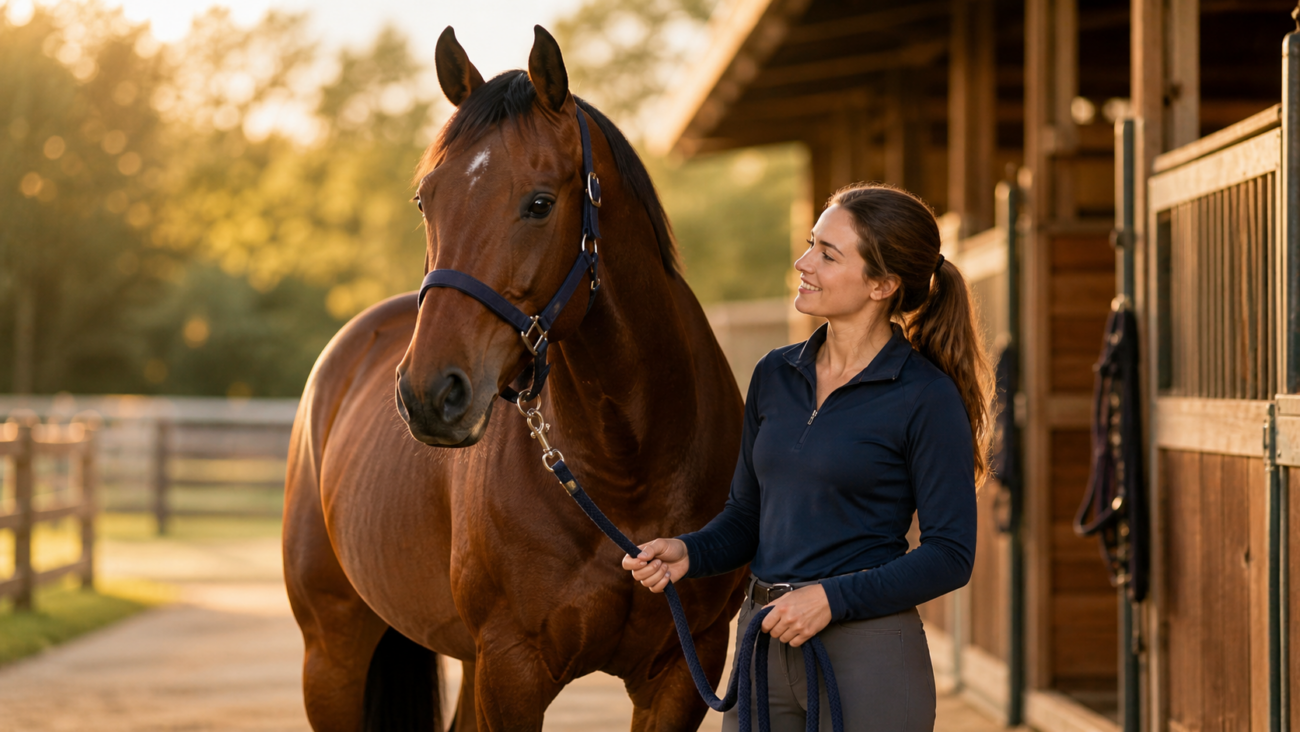
- Halters with quick-release on every stall door
- A clearly marked emergency contact list at every entrance
Building your kit over time
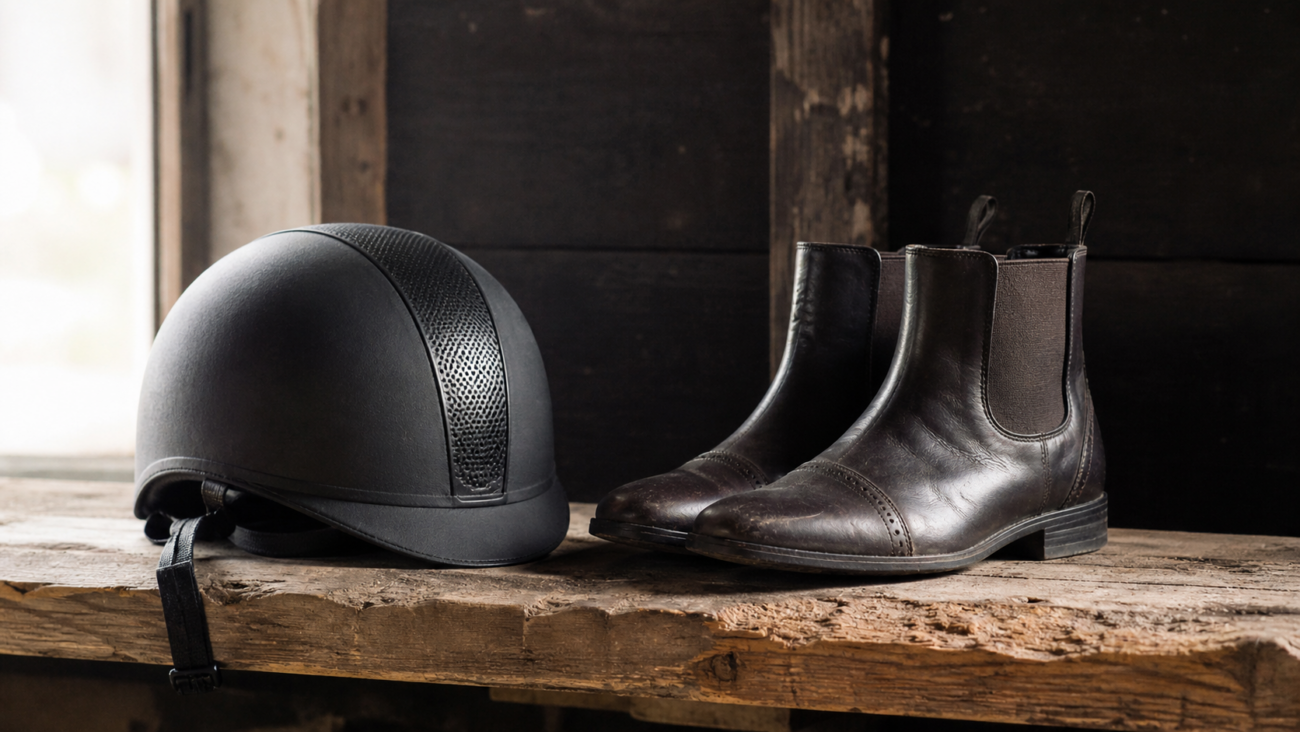
You do not need to buy everything at once. Start with daily-use tools, add storage and grooming as you settle in, and build the first-aid kit with your vet’s input. Invest in quality where it matters — saddles, bridles, helmets, fans — and save money on items that are easy to replace.
A starter shopping checklist
- ✅ Manure fork + wheelbarrow + brooms
- ✅ Feed and water buckets
- ✅ Hay storage solution + slow-feed net
- ✅ Grooming caddy with brushes
- ✅ Saddle/bridle storage
- ✅ Basic first-aid kit + vet contact
- ✅ Lighting and fire safety
- ✅ Emergency contact list
Organize tools by daily, weekly, and emergency use
Group your tools by how often you reach for them so important items are always findable:
- Daily: hoof pick, manure fork, water bucket, hay net, halter and lead — within arm’s reach of the stall
- Weekly: stiff brushes, scrub brushes, conditioner, replacement shavings, bedding tarp — in a labeled storage bin or shelf
- Emergency: first-aid kit, flashlight, halter and lead by every entrance, fire extinguisher, emergency contact list — visible and never blocked
This kind of organization saves time during busy chores and keeps the items you need most close to hand.
Safe storage of supplements and first-aid items
Supplements, fly sprays, and first-aid items need careful storage:
- Use a locking cabinet for supplements, prescription items, and chemicals
- Keep all bottles in original containers with legible labels
- Check expiration dates twice a year
- Store items at room temperature unless the label specifies otherwise
- Keep your veterinarian’s number and any horse-specific medical notes inside or on the cabinet door
A simple stable restock checklist
Set a reminder to check your stable supplies once a month:
- ✅ Bedding — at least 2 weeks of supply on hand
- ✅ Hay — confirmed delivery or stock for the next 4–6 weeks
- ✅ Grain and supplements — top up before running out
- ✅ Fly spray and hoof products
- ✅ First-aid items — replace anything used or expired
- ✅ Trash bags, brooms, paper towels
Restocking a little at a time is far easier than a giant trip every two months.
FAQ
What stable items do I really need on day one?
The starter list: manure fork, wheelbarrow, two clean buckets per stall, hay storage, hoof pick + curry comb + hard brush, halter and lead, basic first-aid kit, and your vet’s contact info. Add the rest over the first few weeks.
How often should I deep-clean buckets?
Empty and rinse water buckets daily; scrub with a stiff brush and vinegar or pet-safe disinfectant weekly. Feed pans should be wiped clean after each meal and scrubbed weekly.
Do I need a separate hay barn?
If possible, yes — for fire safety. If not, store hay in a covered, ventilated area away from electrical panels, and only keep what you will use within 4–6 weeks indoors.
What goes in a horse first-aid kit?
Discuss exact contents with your veterinarian. Common items include vet wrap, gauze, wound spray, equine thermometer, and a first-aid manual. Always include your vet’s emergency number.
How do I keep tack from molding in humid climates?
Store leather tack in a climate-controlled tack room, condition regularly, and wipe down after every use. Damp tack lockers are a major cause of mold — ventilate and use a dehumidifier if needed.
The takeaway
A well-stocked stable is built one item at a time. Start with the daily-use tools, build a first-aid kit with your vet, and invest in quality where it matters. Browse our Equestrian & Ranch shop for stable essentials, or explore more horse guides on the Petrending blog.





 Food & Nutrition
 Treats & Chews
 Toys
 Beds & Furniture
 Bowls, Feeders & Hydration
 Collars, Leashes & Harnesses
 Crates, Carriers & Travel
 Apparel & Accessories
 Grooming
 Health & Wellness
 Training & Behavior

 Food & Treats
 Litter & Cleanup
 Toys
 Trees & Scratchers
 Beds & Furniture
 Bowls & Feeders
 Health & Wellness
 Collars, Harnesses & Apparel
 Carriers & Travel